
Your data on MRCVSonline
The nature of the services provided by Vision Media means that we might obtain certain information about you.
Please read our Data Protection and Privacy Policy for details.

In addition, (with your consent) some parts of our website may store a 'cookie' in your browser for the purposes of
functionality or performance monitoring.
Click here to manage your settings.
If you would like to forward this story on to a friend, simply fill in the form below and click send.

Your friend's email:
Your email:
Your name:
 
 
Send Cancel

Government considering controls on live animal exports
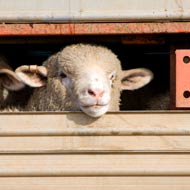
The government is considering options to control live exports after Brexit.
Defra confirms ministers are looking into the issue

The government is considering options to control exports of live animals after Britain leaves the European Union.

According to Farmer's Weekly, Defra minister Therese Coffey confirmed ministers were looking into the issue during a Westminster Hall debate on Tuesday (12 December).

She is reported to have told parliament that the live export trade remained “a considerable concern” despite a huge fall in recent years.

“We have always been clear that the government would prefer to see animals slaughtered as near as possible to their point of production,” she said. “We believe that a trade in meat is preferable to a trade based on the transport of live animals, particularly when journeys may result in livestock travelling long distances across Europe.”

She added that live exports were restricted by the EU, but Brexit was a “unique opportunity to shape future animal welfare policy to ensure the highest standards in every area”.

She continued: “Our manifesto commitment made it clear that we would take early steps to control the export of live farm animals for slaughter once we leave the EU.

“We are currently considering options, but the issue is rather complex and any future proposals would have to consider trade between the UK and Ireland, whether that is with Northern Ireland or across the Republic of Ireland.”

Become a member or log in to add this story to your CPD history

Equine Disease Surveillance report released for Q4 2025

News Story 1
 The latest Equine Disease Surveillance report has been released, with details on equine disease from Q4 of 2025.

The report, produced by Equine Infectious Disease Surveillance, includes advice on rule changes for equine influenza vaccination.

Statistics and maps detail recent outbreaks of equine herpes virus, equine influenza, equine strangles and equine grass sickness. A series of laboratory reports provides data on virology, bacteriology, parasitology and toxicosis.

This issue also features a case study of orthoflavivus-associated neurological disease in a horse in the UK. 

Click here for more...
News Shorts
RCVS annual renewal fee for vets due

RCVS' annual renewal fee for veterinary surgeons is now due. Vets must pay their renewal fee before Wednesday, 1 April 2026.

This year's standard annual fee has increased to 431 from last year's 418. This is an approximately three per cent increase, as approved by RCVS Council and the Privy Council.

Tshidi Gardner, RCVS treasurer, said: "The small fee increase will be used to help deliver both our everyday activities and our new ambitious Strategic Plan, which includes aims such as achieving new legislation, reviewing the Codes of Professional Conduct and supporting guidance, and continuing to support the professions through activities such as the Mind Matters Initiative, RCVS Academy and career development."

A full breakdown of the new fees is on the RCVS website. Information about tax relief is available on the UK government website.

