


Climate change and fishing affecting food supplies
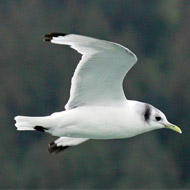
The black-legged kittiwake has been added to the list of birds considered to be under threat of extinction.
The latest revision of birds on the IUCN Red List of Threatened Species brings the total number of UK bird species considered to be at risk of extinction to nine.
Since the 1970s, the species is thought to have declined globally by around 40 per cent. The RSPB says that climate change and fishing are putting the kittiwake closer to extinction.
Alarming trends have been recorded in Scotland, particularly in Orkney and Shetland where breeding has declined by 87 per cent since 2000. In St Kilda in the Western Isles, as much as 96 per cent of the breeding population has been lost.
Laura Bambini, RSPB Scotland’s seabird recovery officer said, “Some efforts are underway to protect important seabird foraging areas in international waters, but there is still much more to be done around Scotland and the rest of the UK to protect our internationally important and increasingly threatened seabird populations.”
In the North Sea, sandeels provide a vital food source for many species of seabird and are key to the breeding success of kittiwakes. However, they are also targeted by industrial fishery. Rising sea temperatures due to climate change also threaten the kittiwake's existence.
Alex Kinninmonth, RSPB Scotland’s head of marine policy, said: “Frequent and widespread breeding failure is now being observed in several of Scotland’s breeding seabird species, particularly those reliant on sandeels. Kittiwakes are among the worst hit and are clearly struggling to cope with the effects of a changing food supply.”
“If they are to have any hope, it’s critically important that we act on climate change, and make sure added pressure from fisheries, pollution and marine development don’t make an already bad situation far worse.”
Image (C) Richard Daniels


 Companies marketing medicines for small pets exempt from authorisation must submit their annual return to the Veterinary Medicines Directorate (VMD) by 30 November 2026.



