


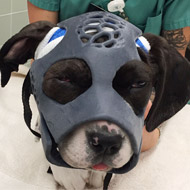
Exoskeleton serves as a cast for fractured dog skull
Vets in California have created the first exoskeleton for dogs with maxillomandibular injuries.
The Exo-K9 exoskeleton is the result of a long-standing collaboration between oral surgeons at UC Davis Veterinary Hospital and students in the university’s biomedical engineering department. The apparatus serves as a cast for the fractured skull whilst it heals.
The device was created for four-month-old Loca, who was presented to UC Davis Veterinary Hospital suffering from severe facial injuries. A bite from another dog had left the Staffordshire bull terrier with a broken cheekbone, jawbone and extensive damage to her temporomandibular joint (TMJ).
As Loca was so young, the oral surgeons believed there was a good chance that the TMJ could correct itself through natural bone regrowth. They also saw the case as a good opportunity to test out the new face mask they had been working on.
After surgery, to remove fragments of bone, the surgical team asked the biomedical engineering students to print the Exo-K9 mask. Specifications garnered through a CT scan allowed the team to fit the mask precisely to her head.
During her recovery, Loca was not given access to any toys, bones, or anything else hard to chew. Her mask and neck collar remained on at all times except to allow her to eat and drink. She was fed a soft diet until her injuries healed.
Three months on, and CT scans shows that her previous surgery sites have healed well and that the new TMJ formation is progressing well. It is hoped that this innovative approach could someday help dogs with severe fractures where internal fixation is not possible.
Image (C) UC Davis Veterinary Hospital


 Eligible members of BEVA will be able to vote for their Council team until Monday, 17 August 2026. Members will have received an election email on 17 July.



