


Kennel Club approves two new DNA testing schemes
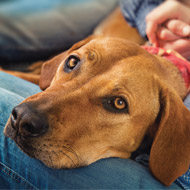
The Kennel Club has approved two new DNA testing schemes including one for juvenile myoclonic epilepsy in Rhodesian ridgebacks.
Two new DNA testing schemes for schnauzers and Rhodesian ridgebacks have been approved by the Kennel Club following consultation with the breeds’ health co-ordinators.
The schemes are for dilated cardiomyopathy (DCM), a heart condition that results in the inefficient pumping of the blood, in schnauzers, and for juvenile myoclonic epilepsy (JME) in Rhodesian ridgebacks.
“These DNA tests will help to enable breeders of schnauzers and Rhodesian ridgebacks to eradicate these conditions in their respective breeds, so we would encourage anyone breeding, or thinking of breeding, to utilise the tests now available to protect and improve the health of these breeds,” said Kennel Club secretary, Caroline Kisko.
“The Kennel Club constantly reviews DNA testing schemes in conjunction with breed clubs to ensure that breeders are supported with resources which help them to make responsible breeding decisions. This will also help puppy buyers to know which conditions affect their chosen breeds so that they can ask breeders about them when they are researching getting a dog.”
To find out which laboratories the Kennel Club is able to record results from, and which labs will send results directly to the Kennel Club, visit www.thekennelclub.org.uk
Test results will be added to the dog’s registration details which will trigger the publication of the result in the next available Breed Records Supplement. The result will appear on any new registration certificate issued for the dog and on the registration certificates of any future progeny of the dog, and also on the Health Test Results Finder on the Kennel Club website.
The Kennel Club adds that results for dogs already tested can also be recorded, but owners will need to submit copies of the DNA certificates themselves. If the owner includes the original registration certificate for the dog, then a new registration certificate will be issued, with the DNA result on it, free of charge.
DNA test certificates should be sent to Health and Breeder Services, The Kennel Club, Clarges Street, London, W1J 8AB or scanned and emailed to hbs@thekennelclub.org.uk.


 Veterinary practices are being urged to help owners safely dispose of any unused and expired pet medicines - not just antibiotics - during November's Animal Medicines Amnesty.




