


We are how we vet…
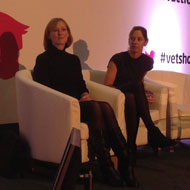
Caroline Pearson (left) opened the session on leadership at BVA Congress.
"Leadership is different for each and every one of us in practice," said Caroline Pearson, opening a session on the subject at the BVA Congress in London. "Change and learning mean first recognising and acknowledging a need," she added.
There are particular difficulties during the transition period into a leadership role.
Self determination is a worthwhile trait but it can lead to 'control freakery' and narcissism, especially at times of stress and when under pressure. Learning how to delegate can be liberating in this respect and the realisation that each and every member of the team not only has a contribution to leadership but also the reality that they are the leadership.
There is some evidence that time pressures and lack of social skills are leading members of the profession down the negative pathways of control freakery, inflexibility and narcissism.
Caroline outlined four principles for improving leadership:
- exceptional leadership and personal well-being are inseparable
- a need to understand the importance of 'the present'
- reflect on personal behaviour and accept responsibility for your part in leadership
- focus on the means, not the end.
Catherine Oxtoby, from the Veterinary Defence Society, expounded the personal core values of the majority of veterinary surgeons – honesty, altruism, personal values and empathy. "If your work is very closely linked to your personal values, when things go wrong it will hit you particularly hard," she said.
She introduced the concept of being a 'second victim'; whereby when a mistake is made resulting in fatality or damage to a patient, the medical professional involved takes the blame on board and suffers the emotional consequences of their action.
This leads to an inability to concentrate, depression, self-doubt, grief and remorse, which is destructive and affects confidence.
Catherine emphasised that we need to be able to distinguish between negligence and malpractice; and to break down the current barriers that prevent 'second victims' from seeking help, particularly the fear of retribution and embarrassment. There was also a pressing need for "someone to be able to talk to".
Concluding, she said that there may well be genuinely different responses between male and female 'second victims'.
"There should be clear guidelines; a safe person to speak to in confidence when things go wrong; communications training for passing on bad news to clients; and uncluttered recognition of the difference between negligence and malpractice."


 Companies marketing medicines for small pets exempt from authorisation must submit their annual return to the Veterinary Medicines Directorate (VMD) by 30 November 2026.



