


Vets welcome new guidelines on antimicrobials
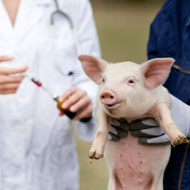
The guidelines recommend an overall reduction in the use of medically important antibiotics in food-producing animals.
The British Veterinary Association has welcomed new guidelines on the use of antimicrobials in animals.
The guidelines, issued by the World Health Organisation (WHO), recommend that farmers and the food industry stop using antibiotics to prevent the spread of antibiotic resistance. They aim to help preserve the effectiveness of antibiotics that are important for human medicine by reducing their unnecessary use in animals.
In a statement, senior vice president Gudrun Ravetz said: “We welcome the WHO continuing to tackle this serious global health issue. Their guidelines echo the guidance BVA has long been issuing on the responsible use of antimicrobials.
“We agree that the prophylactic use of antimicrobials in healthy animals to prevent disease is never a substitute for good animal husbandry and management.”
Informed by research published in The Lancet Planetary Health, the guidelines recommend an overall reduction in the use of all classes of medically important antibiotics in food-producing animals. This includes a complete restriction on antibiotics for growth promotion and disease prevention without a diagnosis.
They also state that healthy animals should only receive antibiotics if a disease has been diagnosed in other animals in the same flock, herd or fish population. Where possible sick animals should be tested to determine the most effective and prudent antibiotic to treat their specific infection.
Furthermore, the guidelines stress that sick animals should be tested to determine the most effective and prudent antibiotic to treat their specific infection. These antibiotics should be chosen from those WHO has listed as being “least important” to human health and not from those classified as “critically important”.
Gudrun Ravetz continued: “Critically Important antimicrobials use is at a very low level in the UK, and, as recent Government data shows, is continuing to decrease. It is encouraging that WHO recognises that these vital medicines are sometimes needed, under veterinary judgment and prescription, as a last resort, to prevent the further spread of disease and to protect animal and human health.”


 Companies marketing medicines for small pets exempt from authorisation must submit their annual return to the Veterinary Medicines Directorate (VMD) by 30 November 2026.



