


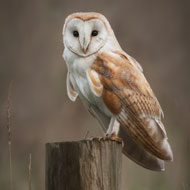
Results consistent to “baseline” years but lower than in 2015
More than three-quarters of barn owls in the UK were found to be contaminated with rat poison in 2016, according to a new report.
The figures, published by The Centre for Ecology & Hydrology (CEH), show that 78 percent of barn owls that died in 2016 had liver residues of at least one SGAR (second generation anticoagulant rodenticide). Experts say these results are similar to “baseline” years but lower than in 2015.
The report comes one year after the launch of the Stewardship for Anticoagulant Rodenticides, which aims to change user behaviour so that unintentional wildlife exposure is reduced. Lee Walker of the Predatory Bird Monitoring Scheme, which took the measurements, said that the results are consistent with measurements taken in the “baseline” period (2006-2012).
“Even stewardship was launched only part way through the year, it is probably too early to expect changes from baseline levels in liver SGARs in 2016,” he said. “If stewardship is successful, we expect to see reductions in liver SGAR concentrations in barn owls in future years.”
SGARs are used to control rats and mice across the world. But wildlife species are also exposed to these poisons, both through consuming bait and by eating poisoned rodents. Concerns in the UK about effects on wildlife resulted in the stewardship for anticoagulant rodenticides, which is led by Campaign for Responsible Use (CRRU) UK.
The report shows that the most frequently detected SGARs in barn owls in 2016 were bromadiolene, difenacoum and brodifacoum, the same as those found in the “baseline years”. Although there was no significant change in most indicators of SGAR expire, there was a decline in low level difenacoum residues.


 Companies marketing medicines for small pets exempt from authorisation must submit their annual return to the Veterinary Medicines Directorate (VMD) by 30 November 2026.



