


BVNA welcomes new president
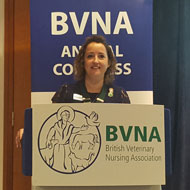
Wendy spoke of the “sense of belonging and being welcomed” she experienced when she attended her first BVNA Congress.
“It is important that as a profession, we have a strong coherent voice,” said the BVNA’s new president, Wendy Nevins, who took up her role at last week’s congress.
She takes over from outgoing president Sam Morgan. Wendy is the first BVNA president to be selected and appointed using the association’s new method of succession planning and recruitment, which was announced as part of its recent governance review.
Speaking to delegates at the AGM, she said the profession is facing many potential changes in the future, including the review of Schedule 3 and the still unknown implications of Brexit. With this in mind, she wants to see more veterinary nurses “step up and speak up”, as it is “through our membership that we gain our strength; the more members we have, the louder our voice will be”.
This could involve taking part in surveys, consultations, the VN Voice Poll, voting in elections, or simply sharing relevant posts on social media. During her presidential year she hopes to double participation in the VN polls, as well as growing and developing Veterinary Nursing Awareness Month.
Turnout of veterinary nurses in recent consultations and elections has been “quite low”, something Wendy believes “really needs to improve if we want to grow our profession”.
She also aims to maintain and grow the BVNA’s relationships with its peer organisations. Looking to the future, she said the association’s recent governance review will enable it to grow.
“I’ve seen the congress, the association, and the profession grow so much over my career, and in everything I do for the BVNA, I will ask: Is this the right thing for our profession? Is this the right thing for animal welfare? And also, is this the right thing for our members?”
Wendy spoke of the “sense of belonging and being welcomed” she experienced when she attended her first BVNA Congress, and still feels today.
Although she has not always worked in the profession, something always brings her back.
“Veterinary nursing is a passion,” she explained. “It’s part of me and something I imagine and hope I’ll always be a part of.”


 A nationwide roadshow offering free, personalised parasite risk assessments and flea and tick checks will be visiting popular dog events across the UK.



