


Panellists call for urgent action at FECAVA-WSAVA Congress
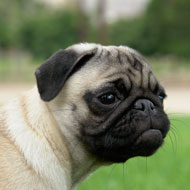
A vet from Norway has called for urgent action on brachycephalic dogs, stating that the profession must ‘dare to speak out’ to help owners understand the condition.
Kristin Wear Prestrud, veterinary consultant at the Norwegian Kennel Club, said: “Vets should dare to speak out. We must educate owners on all health and welfare matters, whether we are simply advising them that their dog is overweight or if we need to give advice on breeding or refuse planned Caesarian sections.”
Kristin was speaking during a panel discussion at the FECAVA-WSAVA Congress in Copenhagen. Attended by some 200 delegates, the discussion explored the issues facing brachycephalic breeds and the implications for veterinary surgeons.
During the discussion, experts from around the world were questioned on strategies to help address the problem in particular countries.
Panellist Helle Fris Proschowsky explained that The Nordic Kennel Union had issued recommendations and breed-specific guidelines for judges, but acknowledged that most brachycephalic dogs in all countries were unlikely to be registered with a kennel club.
Panellist Peter Sandoe confirmed that only 15 per cent of French Bulldogs in Denmark were registered, the majority coming from unregistered breeds. “The education of owners remains the most important priority,” Helle Fris Proschowsky added.
FECAVA vice president Wolfgang Dohne called on vets to help brachycephalic dogs but to advise owners to neuter their animals if they have conformation-altering disorders. Gudrun Ravetz, senior vice president of the BVA added that owners and breeders in the UK now consent to have conformation-altering surgery reported.
“However, while a recent BVA survey showed that 67 per cent of vets say they see breed-related problems, few submit conformation-altering data to the Kennel Club though this would support the development evidence-based solutions,” she said. “As veterinarians we must educate ourselves.”
Tori Moseng, president of the Norwegian Veterinary Association, described work being carried out in Norway to stop advertisers using images of flat-faced dogs. This includes an awareness-raising petition signed by 1,700 vets, a press release urging advertisers not to use brachycephalic breeds in campaigns and a hand-out for owners of brachycephalic dogs.
The vet’s role
Following the panel discussion, the experts issued some recommendations for veterinary surgeons as follows:
At a PRACTICE level, veterinarians should:
- Advise the public not to buy animals with extreme conformation. This applies both to breeds and to individual dogs.
- Raise awareness among dog owners and advise them about health and welfare issues in dogs with extreme conformations.
- Raise awareness among breeders, breed clubs and show judges and advise them as to health and welfare issues in dogs with extreme conformations. Take an active role in pre-breeding examinations and in giving advice regarding potential breeding stock.
- Inform dog owners and breeders about breeding restrictions if a dog is surgically treated for BOAS or other problems related to extreme traits linked to breeding. (In countries where no such restrictions exist, strongly advise against breeding.) Advise neutering at the time of surgery if good practice allows.
- Share data on health and welfare issues related to extreme breeding. Where a national submission system exists, submit details on conformation-altering surgery and caesarean sections related to extreme breeding traits.
At PROFESSIONAL ORGANISATION level, veterinarians should:
- Implement a communication campaign to proactively raise awareness among the public in general and to advise them about health and welfare issues in dogs with extreme conformations.
- Work together with national cynological organisations and other stakeholders to set up registers of confirmation-altering surgeries and caesarean sections as well as relevant screening programmes (i.e. pre-breeding examinations).
- Call for the revision of breed standards to help prevent BOAS and other brachycephalic-related disorders. Breed standards should include evidence-based limits on physical features (e.g. muzzle length) and approaches such as outcrossing should be considered.
- Launch and distribute veterinary health certificates for puppies and/or checklists for prospective buyers in support of responsible, healthy breeding.
- Develop evidence-based international standardised protocols for the examination of breeding animals regarding respiratory function and thermoregulation.
- Set up systems allowing the gathering of data from veterinary practices regarding health and welfare-related issues in dogs with extreme conformations.
- Set up undergraduate training / CPD to equip vets to take a more active role in providing breeding advice to breeders, breeder organisations and judges, related to extreme conformation and screening procedures.


 Eligible members of BEVA will be able to vote for their Council team until Monday, 17 August 2026. Members will have received an election email on 17 July.



