


Advances in hydrotherapy demand high ethical standards
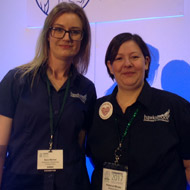
Sara Marlow (left) and Becky Winter at the BVNA Congress.
When veterinary practices refer patients for hydrotherapy, it is essential that they check that good and best practice is being conducted by the referral centre involved, said Sara Marlow and Becky Winter at the BVNA Congress.
Do they belong to recognised associations, take part in appropriate CPD, and carry out the appropriate number of water quality checks – which should be at least three times per day?
Competent hydrotherapy centres will liaise closely with the referring practices and provide a complete assessment service, including health checks at every session, measurement of muscle masses, gait analysis and thermal imaging. There should be regular reporting back to the referring practice and sharing of clinical information.
All dogs should be showered and washed before and after the hydrotherapy session – the former to clean the coat and to warm the muscles, the latter to remove traces of chlorine or bromine from the coat.
There should only be one dog allowed in the pool at one time, and no retrieval of balls and other toys from the surface of the water. Dogs should never enter the pool without a harness.
It has been found that if there is more than one dog in the pool at the same time, there is always the chance that the presence of the additional dog will cause fear and increase its stress levels, such that normal pain responses are overridden and the affected joints may be over-extended and the injury exacerbated.
Nurses working in hydrotherapy centres must be extremely careful to monitor the pain being experienced by referred animals, because these patients should never be subjected to any procedure that increases their discomfort or exacerbates their injuries.
Next year the establishment of the Animal Health Professions Register (AHPR) will improve the standardisation and regulation of hydrotherapy centres to ensure there is an independent source of control and recommendation to which veterinary practices can refer.


 A nationwide roadshow offering free, personalised parasite risk assessments and flea and tick checks will be visiting popular dog events across the UK.



