


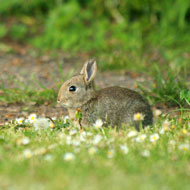
Lesions found on seemingly healthy rabbit
Wildlife vets are urging practitioners to be vigilant for myxomatosis in seemingly healthy rabbits. The warning follows the discovery of the disease in a wild rabbit that was showing no obvious symptoms.
In a letter to Veterinary Record (Sep 30, Vol 181, No 13), The Wildlife Veterinary Investigation Centre (WVIC) reports an unusual presentation of myxomatosis in a rabbit that was shot for human consumption.
The rabbit appeared normal from the outside but, when its coat was clipped back, numerous, slightly raised lesions could be seen. 'No lesions were present around the eyes, face, ears or genitals, anus or elsewhere as might as be expected with typical myxomatosis cases,’ the authors write.
The rabbit was discovered in April 2017 on a farm in Cornwall. Two months later, another rabbit on the same farm was shot because it was showing classical signs of myxomatosis. Analysis by the Animal and Plant Health Agency (APHA) revealed the presence of myxoma virus and DNA sequencing showed it to be identical to that identified in the first case.
'As the partial gene sequence from both cases was identical, this possibly suggests that the very different pathology in the rabbits is due to variation in host response or mode of exposure,’ the authors continue.
‘‘The first rabbit appeared healthy and, had it not been shot, it would seem likely that the infected tissue surrounded by inflammatory cells in a nodule would have become necrotic and developed to form a scab or perhaps a sitfast, as seen in other poxvirus infections such as lumpy skin disease.
‘Practitioners should perhaps be aware that myxomatosis in Oryctolagus- species rabbits can present as an apparently non-lethal condition, exhibiting skin nodules but without any of the classical lesions of the disease.’


 Companies marketing medicines for small pets exempt from authorisation must submit their annual return to the Veterinary Medicines Directorate (VMD) by 30 November 2026.



