


Trend for lion body parts ‘giving rise to poisoning’
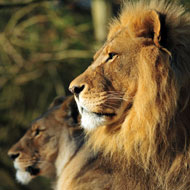
Four lions were found poisoned on the border of the Chuilexi Conservancy late last year.
A leading conservation organisation has said that a growing trend for lion body parts has given rise to incidents of poisoning.
Fauna & Flora International notes that four lions were found poisoned on the border of the Chuilexi Conservancy late last year. The conservancy lies at the heart of the Niassa National Reserve, one of the largest protected areas in Mozambique.
'Niassa faces severe threats from settlement and agricultural expansion, and has recently witnessed an exponential rise in illegal resource extraction and poaching, particularly for ivory,' the organisation writes on its website.
'And now, a disturbing variation on the poaching theme has emerged: the burgeoning demand for lion parts, purportedly driven by China and Southeast Asia, has given rise to several incidences of lion poisoning.'
To tackle the problem, Flora & Fauna International have employed a 50-strong scout force equipped with the latest radio technology. Besides collecting data on lions and wild dogs, their increased presence serves as a strong deterrent to would-be poachers.
“We need perpetual vigilance to safeguard lions, wild dogs and other species from traditional and emerging threats to their survival within and outside the reserve,” explained Flora & Fauna International’s chief executive, Mark Rose. “The generous support that we receive for our activities in Chuilexi is vital to our continued success in this regard."
The Niassa National Reserve covers an area that is around twice the size of Wales. Home to 40 per cent of Mozambique’s elephants, it is one of the most important areas for lion and wild dogs in Africa.
The scout force has recorded wild dog packs containing up to 22 individuals in Chuilexi. Lion prides are typically in single figures, showing just how vulnerable they are to any further loss in numbers.


 Companies marketing medicines for small pets exempt from authorisation must submit their annual return to the Veterinary Medicines Directorate (VMD) by 30 November 2026.



