


Study reveals new insights on pedigree dog health
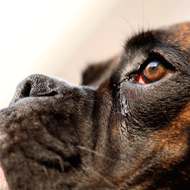
Boxers have the highest number of reported diseases or conditions at a higher prevalence than overall.
A study by the UK’s largest dog welfare organisation has revealed new insights on the prevalence of health conditions in pedigree dogs.
Kennel Club says that its study - the largest of its kind ever carried out - could help dog owners, breeders and vets identify which breeds are most likely to suffer from which disorders.
Study author Dr Katy Evans, Kennel Club health research manager, said: “Dogs of any breed or crossbreed can suffer from conditions that affect their health, both those for which inheritance plays a part and those caused by external factors.
“The results of this study will substantially contribute to the current understanding of disorder occurrence in dogs in the UK and will be a massive help to dog owners as it gives them an idea of what to look out for, particularly if their breed has a higher than average incidence of a certain condition.”
Published in the journal Canine Genetics and Epidemiology, the study used owner-reported morbidity data on some 43,005 living dogs registered with the Kennel Club. The data was used regardless of whether the disorders received veterinary care.
It reveals that the top three disorders in UK dogs are all skin conditions - lipoma, cysts and allergic skin problems. While allergic skin conditions commonly occur as a result of the dogs’ environment, Kennel Club believes the recent trend for dog clothing could also be attributed to the apparent increase.
The study also shows that boxers have the highest number of reported diseases or conditions at a higher prevalence than overall, with skin cancer or tumours being the most commonly reported condition in the breed. This was followed by the Cavalier King Charles spaniel and the pug.
Conversely, the study found that the Labrador has the highest number of reported conditions occurring at a lower prevalence than overall across all breeds, followed by the cocker spaniel and the border terrier.
Dr Evans continued: “The majority of the larger studies into disease prevalence rely on primary care veterinary data, which does not take into account dogs which may be affected by fairly harmless conditions that can be safely managed at home without veterinary treatment. By gathering and analysing large amounts of owner-reported data, we can get a clearer picture of the health of the whole dog population.
“Much of what the study found confirms what the Kennel Club and responsible dog breeders already know, which is reflected in the range of health schemes and other tools already in place to tackle various conditions, and it will certainly help us to prioritise health concerns in dogs and further develop plans to protect their health.”


 Eligible members of BEVA will be able to vote for their Council team until Monday, 17 August 2026. Members will have received an election email on 17 July.



