


Local communities baffled by sighting
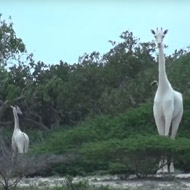
A rare white baby giraffe and its mother have been spotted on a nature reserve in Kenya.
According to a blog by the Hirola Conservation Programme, the rare animals were spotted in the Ishaqbini Hirola Conservancy in Gariss County. A video of the giraffes posted on YouTube has since gone viral.
While many people have been quick to assume that the giraffes are albino, experts say that they are more likely suffer from a genetic condition called leucism.
Leucism is a disease that results in the partial loss of pigmentation in an animal. It leads to white, pale or patchy colouration of the skin, hair, features, scale or cuticle, but not the eyes. Albinism, on the other hand, is characterised by the complete absence of pigment - so animals with this disease often have pink eyes.
This is not the first time that a sighting of white giraffes has been recorded. The first occurred in January 2016 in the Tarangire National Park, Tanzania. A second sighting took place three months later at the Hirola Conservancy.
Hirola Conservancy reports that the local community has become so excited about the giraffes to a point where everyone has been participating in reporting the sightings.
It adds that there has been a mixed reaction to the recent sighting, with most of the elders living within Ishaqbini saying they have never seen such a thing before.
"This is new to us” says Bashir, one of the community rangers who alerted Hirola Conservancy when they sighted the white giraffe. “I remember when I was a kid, we never saw them” he added. “It must be very recent and we are not sure what is causing it,” he said.


 Companies marketing medicines for small pets exempt from authorisation must submit their annual return to the Veterinary Medicines Directorate (VMD) by 30 November 2026.



