


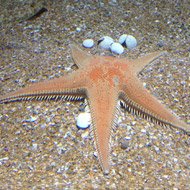
Animals consuming plastic fibres from clothing
Around 50 per cent of deep sea creatures living in the North Atlantic could be consuming microplastics, according to new research.
In a study, scientists at the Scottish Association for Marine Science (SAMS), Oban, Scotland, sampled sea snails and deep-sea starfish in the Rocktail Trough.
They found microscopic traces of plastic in 48 per cent of these creatures, which live at depths of more than 2,000 meters.
While traces of microscopic plastic have been found in the deep sea before, this is the first time that microplastic ingestion in deep-sea invertebrates has been quantified.
Microplastics are defined as being less than five millimetres in length and, when eaten by sea animals, can travel up the food chain.
The study, published in Environmental Pollution, identified a range of plastics. Polyester was the most abundant plastic identified, mainly in the form of microscopic fibres.
Researchers say that while it is not possible to know its origin, the substance is used widely in clothing and can reach the sea in waste water from washing machines.
The researchers also found naturally buoyant substances, such as polyethylene used to make carrier bags, inside brittle stars, sea snails and star fish.
Lead author of the paper Winnie Courteney-Jones said that more than 660 marine species worldwide are reported to be affected by plastics.
“Microplastics are widespread in the natural environment and present numerous ecological threats, such as reducing reproductive success, blocking digestive tracts and transferring organic pollutants to organisms which eat them,” she said.
“There is much evidence of microplastics around coastal waters but little is known about the extent of plastic pollution in the deeper ocean. The deep sea is the largest, but also the least explored part of the planet and may be the final sink for plastics.
“More work is needed on the wider ocean environment to understand the long term fate of marine plastics.”


 Companies marketing medicines for small pets exempt from authorisation must submit their annual return to the Veterinary Medicines Directorate (VMD) by 30 November 2026.



