


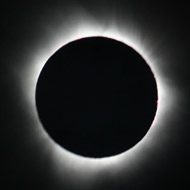
Rhinos began running around and birds became more vocal
As the solar eclipse took place in America on Monday (21 August), scientists across the country camped out in zoos, wildlife parks and aquariums to see how the animals would react.
At the South Carolina Aquarium, Charleston, experts set up a series of cameras to record the animals’ response. Monitoring stations were also set up in the Salt Marsh Aviary and Mountain Forest Exhibits.
At Nashville Zoo, some 7,000 people gathered to observe the once-in-a-lifetime event. Rhinos and giraffes started running when the sky turned black and flamingoes flocked closer together. However, zookeepers were unsure if the strange behaviour was a reaction to the eclipse or a reaction to the noise of the crowd.
Zoo spokesperson Jim Bartoo told Fox News that the kangaroos became nervous, but it seemed more because of the cheers that erupted during the eclipse instead of the darkness.
During the eclipse, members of the public were encouraged to report their wildlife observations on the iNaturalist App, created by the California Academy of Science.
According to reports, people noted cows mooing, crickets chirping and fireflies emerging. However, most of the observations submitted suggested that animals didn’t really do much at all.
A Business Insider editor in Los Angeles said that a swarm of bees hit her office window after the eclipse passed, possibly because they were confused by the moment of darkness.
At Memphis Zoo, staff reported that the Nile crocodiles became very active. One zookeeper said that they’d not seen so much activity from them during all their time at the zoo. As the darkness fell, black bears started to run around and birds became more vocal.
Image (C) Denys.


 Companies marketing medicines for small pets exempt from authorisation must submit their annual return to the Veterinary Medicines Directorate (VMD) by 30 November 2026.



