


Researchers assess predictive value of measurements
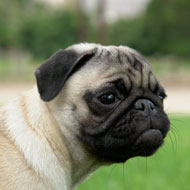
There is no simple way to predict whether an apparently healthy pug or French bulldog will go on to develop breathing difficulties, according to new research.
The findings, published in PLOS ONE, could have implications for attempts to ‘breed out’ the potentially life-threatening condition.
In 2015, a study by the RVC suggested that dogs whose muzzles accounted for less than half their cranial lengths and dogs with thicker neck girths were at higher risk of brachycephalic obstructive airway syndrome (BOAS).
But new research, published by the University of Cambridge, suggests that these measures applied to individual breeds are not dependable for this purpose.
In the study, researchers took measurements from some 600 pugs, bulldogs and French bulldogs. The measurements included head and neck shape, the external appearance of nostrils, body size and condition score. Each of the dogs had been graded for respiratory function.
The team found that while the external head measurements did have some predictive value for respiratory function, the relationship was not strong. The measurements that showed the best predictive relationship to BOAS varied between breeds.
“It can be incredibly difficult to take measurements such as distance between eyes or length of nose accurately, even for experienced vets, as the dogs don’t keep still,” says Dr Jane Ladlow, joint lead author of the study. “This may explain why it is so difficult to replicate the findings of the previous study or find any conclusive markers in our own.”
To some degree, researchers found that a more reproducible measurement was neck girth. A larger neck girth in comparison to chest girth or neck length was associated with disease in the bulldog and French bulldog.
The best measure identified by the team was the degree of nostril opening. Researchers say this proved a moderately good predictor of the presence of BOAS in pugs and French bulldogs and was also a useful marker for disease in bulldogs.
When combined, the variables measured gave an 80 per cent accuracy on predicting whether dogs will have BOAS. The difficulty of taking accurate measurements and combining them to produce a prediction means that researchers would not recommend using them as a guide to breeding.
“Breeding for open nostrils is probably the best simple way to improve these breeds. Dog breeders should also avoid using dogs with extremely short muzzles, wide faces, and thick necks,” said Dr Nai-Chieh Liu, first author of the study. “These traits are all associated with increased risk of having BOAS.”
Joint lead author Dr David Sargan adds: “At this moment there is no conclusive way of predicting whether any individual pug or bulldog will develop breathing difficulties, so we are now looking for genetic tests that may help breeders get rid of BOAS more rapidly.
“The best advice we can give to owners of short-nosed dogs is to make sure you get your dog checked annually for any potential difficulties in breathing, even if you have not yourself observed any in your dog, and to keep your dog fit and not let it get fat.”


 Eligible members of BEVA will be able to vote for their Council team until Monday, 17 August 2026. Members will have received an election email on 17 July.



