


Northern Ireland achieves BSE negligible risk status
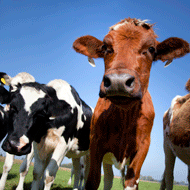
Northern Ireland has achieved the lowest risk level status available for BSE.
Northern Ireland has achieved the lowest risk level status available for Bovine Spongiform Encephalopathy (BSE).
The new risk status was formally recognised by the World Organisation for Animal Health (OIE) in May 2017 and formally endorsed by the European Union on 27 July 2017.
This allows exporters in Northern Ireland to take full advantage of the new trading opportunities it offers, according to Northern Ireland’s department of agriculture.
The news comes just one week after Scotland also announced that it had achieved BSE negligible status.
Robert Huey, chief veterinary officer for Northern Ireland, said that achieving this status is a ‘huge boost’ for the beef sector in Northern Ireland and the ‘culmination of years of invaluable work’.
“The new risk status will enhance the international image of Northern Ireland as a disease-free area and provides an excellent platform from which to increase our beef exports to international markets,” he said.
“We are now working with the beef industry to maximise the benefit secured from this newly gained status, while maintaining our high standards of public and animal health.”
Connell Donnelly, CEO of the Northern Ireland Meat Exporters Association (NIMEA), added that the status is a ’strong endorsement of the health standards of the Northern Ireland herd'.
“This will pay dividends in terms in terms of our international reputation and will be a significant factor in helping to further develop our access to global markets," he continued. "As an industry we are working closely with government to capitalise on negligible Risk Status and ensure the greatest possible benefit.”


 Companies marketing medicines for small pets exempt from authorisation must submit their annual return to the Veterinary Medicines Directorate (VMD) by 30 November 2026.



