


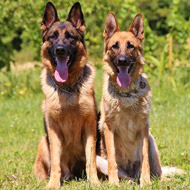
Research will allow vets to make evidence-based recommendations
New research has revealed fresh insights into the demographics and disorders of German shepherd dogs.
It is hoped the information will raise awareness of the susceptibility of German shepherds to a variety of health conditions, inform diagnosis and treatment, and help potential owners decided between a male and a female puppy.
One of the UK’s most popular breeds of dog, the German Shepherd is used for herding, policing, guarding, military and guide-dog work. But, over the decades, its physical shape has become more extreme. Today, there is much debate about how this impacts the overall health of the breed.
In a new study, researchers from the RVC’s VetCompass programme analysed data from hundreds of clinical records across the UK.
Their findings reveal:
▪ That German shepherds are not as popular in the UK as they once were, falling from 3.5 per cent of all dogs born in 2005, to 2.3 per cent in 2013
▪ Some 63.43 per cent of German shepherds had at least one disorder recorded during 2013
▪ The average lifespan of German shepherds was 10.3 years, similar to other breeds of this body size
▪ The most common disorders recorded in the breed were ear infection (7.89%), osteoarthritis (5.54%), diarrhoea (5.24%), obesity (5.18%) and aggression (4.76%).
The RVC says that this information will assist assists owners to be alert for these conditions; for example, to regularly check the ears for pain and redness. It also suggests that preventative treatment may be worthwhile, such as managing diet to reduce diarrhoea and obesity.
The study also identified three major differences between male and female German shepherds that could help vets and owners during the selection of a new puppy.
▪ Adult male German shepherds (average 40.1 kg) were much heavier than adult females (average 34.8 kg). This has implications for feeding costs, space requirements and issues around lifting the dogs if required
▪ Male German shepherds were much more likely to show aggression than females (6.75% versus 2.78%). One implication may be that families with children may choose a female whereas male dogs may be more appropriate for guarding roles.
▪ Female German shepherds lived on average 1.4 years longer than male German Shepherds (11.1 years versus 9.7 years).
“One of the most common questions from prospective dog owners that I used to hear when I was in practice was whether to choose a boy or a girl puppy,” said Dr Dan O’Neill, an RVC epidemiologist and lead author of the study. “With the power of VetCompass™, vets are now finally able to answer this question with some solid evidence for the first time.”
Caroline Kisko, Kennel Club secretary added: “The Kennel Club welcomes research which provides valuable information about the health of dogs of any breed. The German shepherd dog is one of the seventeen breeds in the first round of the Kennel Club’s Breed Health and Conservation Plan project and therefore this new piece of research will form a valuable part of the evidence-base for this breed.
“Research projects such as these will allow evidence-based recommendations to be made as to how to advance the health and welfare of the breed.”
Image (C) RVC


 Eligible members of BEVA will be able to vote for their Council team until Monday, 17 August 2026. Members will have received an election email on 17 July.



