


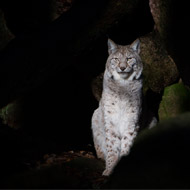
Trust plans to introduce six Eurasian lynx to Kielder Forest
An application to carry out a trial reintroduction of Eurasian lynx in Northumberland has been submitted to Natural England.
The Lynx UK Trust wants to introduce six Eurasian lynx in the Kielder Forest region. It is the first time an application has ever been made in the UK for this species.
The Trust is now waiting on a response from Natural England.
“It's incredibly exciting to see it all come together after an intense couple of years,” commented Dr Paul O’Donoghue, chief scientific advisor on the project.
“Tens of thousands of man hours of work by a huge team of people have gone into consultations shaping this final application which marks a significant milestone in the history of UK conservation; potentially the first return of an extinct predator, which could prove to be a really keystone species for our ecosystem.”
It was just over a year ago that Lynx UK Trust announced their plans to explore the possibility of bringing the Eurasian lynx back into the British ecosystem. Thought to have been wiped out by fur-hunting and loss of habitat some 1,300 years ago, Lynx UK Trust says that their absence has contributed to an over-population of their favourite prey; roe deer.
If Lynx UK Trust are granted permission, they will introduce six Eurasian lynx (four females and two males) to the Kielder Forest region wearing satellite collars. The lynx will come from healthy wild populations in Europe and be subjected to full veterinary screening.
The Trust will then study the lynx over a five-year period, gathering data that could show whether a full reintroduction can be carried out with more individuals across a wider area.
“We've now reached a point where we feel every piece of research has been done, every concern that can be raised has been raised, and the only way to move truly forward is with an intensively monitored trial reintroduction of a small number of cats,” said Dr O’Donoghue.
“That can tell us exactly how suitable the lynx would be for a larger reintroduction. We very much hope the lynx has the opportunity to prove it can bring so much to the local community and the UK as a whole.”
Image (C) Chris Godfrey.


 Companies marketing medicines for small pets exempt from authorisation must submit their annual return to the Veterinary Medicines Directorate (VMD) by 30 November 2026.



