


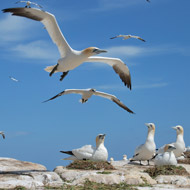
Charity calling for national census
The UK’s largest nature conservation charity has reported a dramatic increase in the number of seabirds making their home on the Yorkshire coast.
A survey by the RSPB reveals that Bempton cliffs, Flamborough Headland and Filey Bay are home to some 412,000 seabirds, including gannets, puffins and razorbills.
Since 2000, the number of gannets has increased from 2,500 to 13,400 breeding pairs. But despite this increase,
the pattern isn’t mirrored around other parts of the country.
The RSPB is now calling for a full national census to better understand how seabirds are doing across the UK.
“This latest survey highlights the international importance of this stretch of coastline is for breeding seabirds,” commented Keith Clarkson, RSPB’s Seabird Census project manager.
“While the birds at sites such RSPB Bempton Cliffs are doing well, the national indicator suggests that seabirds around the rest of the UK are struggling. It is vital for the future of our seabirds that we now have a national census to learn more about the colonies around the UK and to pinpoint our efforts to help save them.”
The survey of the 17 mile stretch of coastline took a team of six experts 253 hours to complete.
Since the last survey in 2000, guillemot numbers have increased from 31,000 to more than 57,000 pairs, kittiwakes from 42,000 to 45,300 pairs, razorbill jumped from 5,700 to 19,000 pairs, and the number of puffins reached 1,440 pairs.
But since 1982, the UK’s Seabird Population Indicator – based on breeding numbers for 13 species of seabird from a handful of colonies – has declined by 22 per cent, with most of this decline taking place over the last ten years.
“It’s wonderful that at Flamborough and Filey Coast numbers are increasing. Attracted by safe cliff nests and plentiful food out at sea, Flamborough is now the most important colony for gannets and kittiwakes in England,” said Anne Armitstead, Natural England’s Yorkshire coast project officer.
“Sadly, elsewhere across the UK, seabird numbers are in decline and detailed bird surveys like this provide important evidence to inform our protection work with the RSPB and other partners.”
Image (C) Flickpicpete


 Companies marketing medicines for small pets exempt from authorisation must submit their annual return to the Veterinary Medicines Directorate (VMD) by 30 November 2026.



