


Symposium highlights importance of human-animal bond
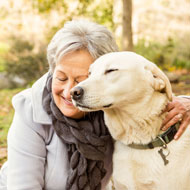
The event reviewed the strong, lifelong bond that owners have with their pets.
The importance of the human-animal bond to society has been explored at the sixth CABI RVC Symposium on Animal Welfare and behaviour.
Held on Wednesday (21 June), the Symposium focussed on the link between human and animal welfare and the need to convey positive messages to key stakeholders in animal and human health.
Opened by Professor Daniel Mills from the University of Liverpool, the event reviewed the strong, lifelong bond that owners have with their pets and the benefits they can bring to human mental and physical health. It also looked at the significant difference dogs make to people living with disabilities.
Professor Mills made reference to a report published by CABI in which he and fellow experts estimated that pet ownership in the UK could cut the use of the NHS to the value of £2.5 billion per year. He noted that the human-animal bond depends on responsible pet ownership; physically, socially and mentally healthy pets are a reflection of a healthy society.
Professor Alex German from the University of Liverpool described the links between companion animal and human obesity. He explained that obese pets often have overweight owners. His research shows that owners of obese dogs tend to have very strong relationships with their animals, and that food is often an important part of that bond - being used to train or treat them.
Changing owner behaviour can be very challenging; Dr German recommends educating owners of new puppies to help prevent the problem.
Dr Siobhan Abeyesinghe, from the RVC, explored human attitudes to animal welfare and how our beliefs and knowledge can impact the human-animal bond. She noted that owners perceiving inherited diseases in purebred dogs as ‘normal for the breed’ illustrates how challenging it can be to change attitudes to welfare.


 Companies marketing medicines for small pets exempt from authorisation must submit their annual return to the Veterinary Medicines Directorate (VMD) by 30 November 2026.



