


Over 50 per cent of local white-toothed shrews tested positive
Recent reports have suggested that a lethal form of encephalitis, called borna disease, has been newly discovered in Upper Austria. The disease causes a fatal infection in the brains and spinal cords of infected sheep and horses but does not harm humans.
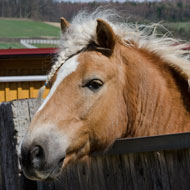
The study, undertaken by scientists at the Vetmeduni Vienna in collaboration with local vets and the Austrian Agency for Health and Food Safety (AGES), revealed that four horses had been affected within a 17km range of one another, in the past two years. The discovery prompted testing of local shrews - the only known reservoir host for the disease - with tests confirming them as the local reservoir host.
Local veterinarians first recognised a potential outbreak when they diagnosed neurological disorders in four horses, in a previously uninfected area of Upper Austria. This led to the testing of local bicoloured shrews, with more than fifty per cent testing positive for bornavirus and, for the first time, one common shrew. The protected bicoloured white-toothed shrew is a lifelong carrier of the virus, despite remaining asymptomatic.
Norbert Nowotny of the Institute of Virology, said: “For the first time, we have now identified an infected common shrew. Further studies are needed to show whether this species also serves as a reservoir host or if this is an isolated case.”
The team also compared the strain found in Upper Austria to that found in neighbouring regions. Nowotny went on to explain that: “Unlike one would expect from their geographic proximity, the Upper Austrian bornaviruses were not genetically related to those in Bavaria but to a viral strain from Rhineland-Palatinate. Since its description, this strain has been found in other areas in Germany and now also in Austria.
“This shows that we are still lacking important information about how the various strains of bornavirus spread. The identification of a previously unknown endemic area for bornaviruses in Upper Austria was a surprise for us all.”
The discovery has prompted questions over the best way to protect animals from contracting the virus; a difficult task when the hosts are a protected species. Advice is focused around excluding shrews from stables through the use of self-closing doors and barriers, as well as maintaining good hygiene standards and systematic controls of potential danger zones.
Herbert Weissenböck of the Institute of Pathology and Forensic Veterinary Medicine, said: “This case has shown that many scientific studies begin with the watchful diagnosis by practicing veterinarians. This awareness must be further strengthened. The good cooperation with AGES has shown that we can make rapid progress when we work together. The proof that the bornaviruses were present in both horses and shrews confirmed not only the veterinarians’ diagnosis but will also help us to develop strategies for the future.”
Photo © Michael Bernkopf/Vetmeduni Vienna


 Companies marketing medicines for small pets exempt from authorisation must submit their annual return to the Veterinary Medicines Directorate (VMD) by 30 November 2026.



