


Changes often overlooked by the scientific community
Cities represent some of the world’s hotspots for evolution and behavioural adaption, a leading biologist has said.
Simon Watt - founder of the Ugly Animal Preservation Society - is quoted by The Guardian as having told the Cheltenham Science Festival:
“The ice caps are melting, the rainforest is shrinking, the one environment that is growing is cities. If we’re going to look for evolutionary shifts right now in our world, the place to look is cities.”
Simon gave several examples of how cities are prompting genetic shifts and unexpected behaviours.
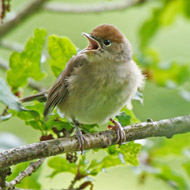
One example is the black cap warbler, which used to migrate to Morocco or Southern Spain. Nowadays these birds come to Britain, attracted by the warmth and people feeding them in their gardens.
“The ones that come to Britain are starting to get shorter wings – better for manoeuvrability, worse for long flights – and longer beaks, which are better to get through the wee bars of garden bird feeders, although worse for things like fruits and berries,” he said.
He also described how birds, through acclimatisation, have changed their vocalisations:
“In general we can say that birds in cities have a couple of things in common. They tend to sing at a higher pitch, they tend to use fewer notes and they tend to sing faster.
“They have their own urban music. This happens across all the species, they sing at different times – at night because they’ve got street lights. They are not quite sure when it’s bedtime. It does mean that some of these birds are stressed out.”
He even spoke about how a species of mosquito, normally found in the south, has evolved to live in the London Underground.
The Cheltenham Festival attracts some of the world’s greatest scientists, imaginative thinkers, science bloggers and comedians. Held 6-11 June, this year’s event featured talks on climate change, insect-eating and the future of our oceans.
Image (C) Michael Sveikutis


 Companies marketing medicines for small pets exempt from authorisation must submit their annual return to the Veterinary Medicines Directorate (VMD) by 30 November 2026.



