


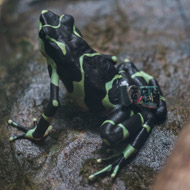
Can captive-bred frogs can survive in the wild?
US researchers have released 90 Limosa harlequin frogs with mini radio transmitters into the Panamanian rainforest.
The trial project, led by The Smithsonian Conservation Biology Institute, aims to study the transition of frogs from living under human care to surviving in the wild.
Limosa harlequin frogs are an endangered species endemic to Panama. But Smithsonian scientists have successfully bred them in captivity.
The release of the frogs will determine whether they can survive the transition from human care into their natural habitat. It will also ascertain whether the frogs persist and go on to breed.
Amphibian conservation biologist Brian Gratwicke is managing the project.
“Only by understanding the trials and tribulations of a frog’s transition from human care to the wild will we have the information we need to someday develop and implement successful reintroduction programs,” he said.
“Although we are not sure whether any of these individual frogs will make it out there, this release trial will give us the knowledge we need to tip the balance in favour of the frogs.”
The Limosa frogs were released at the Mamoní Valley Preserve and will be monitored daily by conservation doctoral student Blake Klocke.
The frogs have small numbered tags inserted under their skin so that the researchers can tell them apart. They also have a toe marking that glows under UV light so they can be easily identified from any future releases.
Image (C) Smithsonian Conservation Biology Institute.


 Companies marketing medicines for small pets exempt from authorisation must submit their annual return to the Veterinary Medicines Directorate (VMD) by 30 November 2026.



