


Study reveals when and why whales got so big
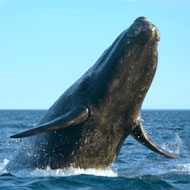
The blue whale is the largest animal on earth - but it didn't happen by chance!
Research by the University of Chicago has revealed when and how whales became some of the largest mammals on earth.
The study, published in Proceedings of the Royal Society B, found that baleen species - such as the blue whale - appeared about two to three million years ago.
Scientists say that increasing ice sheets in the Northern Hemisphere during this period likely changed the way whales’ food was distributed in the oceans and enhanced the benefits of a large body size.
“We might imagine that whales just gradually got bigger over time, as if by chance, and perhaps that could explain how these whales became so massive,” said Graham Slater, assistant professor of geophysical sciences at the University of Chicago.
“But our analyses show that this idea doesn’t hold up—the only way that you can explain baleen whales becoming the giants they are today is if something changed in the recent past that created an incentive to be a giant and made it disadvantageous to be small.”
In the study, researchers measured an array of fossil skulls from the Smithsonian’s National Museum of Natural History’s collection. Together with published data on additional specimens, they estimated the length of 63 extinct whale species.
Using the fossil data, combined with data on 13 species of modern whales, the team examined the evolutionary relationship between whales of different sizes. Their data revealed that the large whales that exist today were not present for much of whales’ history.
The team then tracked this discrepancy back to a shift in body size that occurred about 4.5 million years ago. They explain this shift corresponds with climate changes that would have reshaped whale’s food supply in the oceans.
Food resources would have been evenly distributed throughout the oceans before the ice sheets began to cover the Northern Hemisphere, they explain. But when glaciation began, run off from the new ice caps would have washed nutrients into coastal waters, boosting food supplies.
During this change, baleen whales, which filter small prey out of seawater, were well equipped to take advantage of these dense patches of food.


 Companies marketing medicines for small pets exempt from authorisation must submit their annual return to the Veterinary Medicines Directorate (VMD) by 30 November 2026.



