


Study links declawing to abnormal behaviour
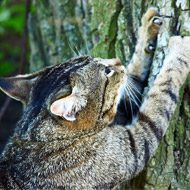
Declawing surgery is usually performed stop cats from damaging furniture or as a way for owners to avoid scratches.
A study by US scientists has revealed a link between declawing and inappropriate behaviour in cats.
Published in the Journal of Feline Medicine and Surgery, the study found that declawing increases the risk of long-term or persistent pain. In turn, this leads to abnormal behaviour such as defecating outside the litter box, aggression and biting.
Researchers say that not only is this detrimental to the cat (as such behaviours are common reasons why so many cats are sent to rehoming centres), it also has health implications for owners, as cat bites can be serious.
“The result of this research reinforces my opinion that declared cats with unwanted behaviours may not be “bad cats”, they may simply need pain management,” commented lead author Nicole Martell-Moran, a veterinary practitioner in cat-only clinic in Houston, Texas.
“We now have scientific evidence that declawing is more detrimental to our feline patients than we originally thought and I hope this study becomes one of many that will lead veterinarians to reconsider declawing cats.”
In the study, researchers examined 137 non-declawed cats and 137 declawed cats for signs of pain and excessive grooming. The team also reviewed the cats’ medical history for unwanted behaviours.
They found that inappropriate behaviour, such as biting, aggression, toileting outside the box and over-grooming, occurred more often in declawed cats than the non-declawed cats.
Declawed cats were almost three times more likely to be diagnosed with back pain than a non-declawed cat. The researchers say this could be due to altered gait owing to the shortening of the declawed limb, or chronic pain at the surgery site, causing weight shift to the pelvic limbs.
Guidance for performing declawing in America is to remove the entire third phalanx (P3) - the most distal bone of the toes. But the researchers found fragments of P3 in 63 per cent of the declawed cats, reflecting poor or inappropriate surgical technique.
Illegal in many countries, declawing is still a common practice in some. Surgery is usually performed stop cats from damaging furniture or as a way for owners to avoid scratches.
Previous studies have centred on short-term issues following surgery, such as lameness and infection. But this is the first time that the long-term health effects of this procedure have been investigated.


 Eligible members of BEVA will be able to vote for their Council team until Monday, 17 August 2026. Members will have received an election email on 17 July.



