


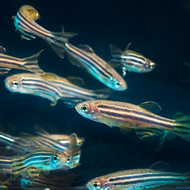
Scientists find larval zebrafish respond to pain and pain relief
Liverpool researchers say larval zebrafish could be used as an alternative model for the study of pain, sparing the many adult zebrafish that are currently used in toxicity tests.
The University of Liverpool's Dr Lynne Sneddon, who debunked the theory that fish cannot feel pain, was uncomfortable about the increasing use of adult fish in pain research, and decided to lead a study on replacing them with larvae that are just a matter of days old.
Researchers exposed five-day post-fertilisation zebrafish embryos to dilute concentrations of acetic acid and citric acid, which are known to irritate adult fish.
Using software to track their motions, the team found that in the most concentrated solutions of acetic acid, and all concentrations of citric acid, the minute fish swam harder and farther, possibly to escape the uncomfortable feeling. However, the larvae became less active in the two most dilute solutions of acetic acid.
When researchers administered pain relief to the disturbed larvae (in the form of aspirin, morphine and lidocaine) the discomfort appeared to ease and their behaviour returned to normal.
As a result the team recommend that larval zebrafish could be used as a model for the study of pain. Their full findings were published in the Journal of Experimental Biology.
Image by Oregon State University (CC BY-SA 2.0)


 Companies marketing medicines for small pets exempt from authorisation must submit their annual return to the Veterinary Medicines Directorate (VMD) by 30 November 2026.



