


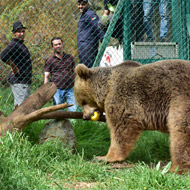
Animals transferred to a rescue centre in Jordan
International rescue team FOUR PAWS are celebrating following the successful rescue of lion Simba and bear Lula from the bombed-out Montazah Al-Morour Zoo in Mosul, Iraq.
FOUR PAWS arrived in Mosul several weeks ago following an armed conflict between Iraqi and IS forces. They found the animals starving and in desperate need of care - the bombings had killed many of the animals, while several more escaped.
In March, FOUR PAWS attempted to rescue the last two remaining animals - Simba and Lula - but their attempt was thwarted after the military prevented them from crossing the border. Simba and Lula have since spent the last nine days waiting at a checkpoint controlled by the Iraqi Army and the Kurdistan region.
Now, following lengthy negotiations with representatives of the government, Simba and Lula have finally arrived at the rescue and rehabilitation centre New Hope in Amman, Jordan. Yesterday (11 April), FOUR PAWS released the animals into temporary enclosures where they can now begin their recovery.
“It has been a massive challenge but now we are so happy that we’ve been able to bring Lula and Simba to New Hope Centre where they are well cared for,” said FOUR PAWS vet and leader of the mission Dr Amil Khalil.
“From now on they will have a much better life. With proper food, veterinary care and in a species appropriate environment, they can live without the constant danger of a nearby war-zone and the noise of bomb blasts in the background.”
Lula and Simba will remain in their temporary enclosures until they have adapted to their new surroundings and their permanent enclosure is ready for them.
The New Hope Centre, which is financially supported by FOUR PAWS, was established in January 2010 by the Princess Alia Foundation. The purpose of the centre is to provide rehoming, rehabilitation and veterinary treatment for animals rescued from very poor keeping conditions.
FOUR PAWS have set up a fundraising page to help give Lula and Simba a welcoming, species-appropriate enclosure with enough space for them to act out their natural instincts. To pledge your support to the campaign, visit: https://action.four-paws.org.uk/donate/iraq
Image (C) FOUR PAWS


 Companies marketing medicines for small pets exempt from authorisation must submit their annual return to the Veterinary Medicines Directorate (VMD) by 30 November 2026.



