


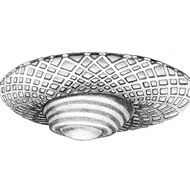
Development marked significant evolutionary advance
New research by the University of Edinburgh has revealed that skeletons and shells first came into being 550 million years ago, as the chemical make-up of seawater changed.
Published in the journal Proceedings of the Royal Society B, the research shows that ancient marine life may have developed from soft-bodied animals.
As oxygen levels rose and calcium and magnesium levels changed, they developed into creatures with hard body parts, researchers say.
“How animals produced shells and skeletons is one of the major events in the evolution of life. We are only now starting to understand the processes underlying this revolution,” commented lead author Professor Rachel Wood.
Previously, scientists believed that soft-bodied organisms underwent a mass extinction, which allowed organisms with shells and skeletons to flourish. But this new research shows that the earliest lifeforms with hard body parts co-existed with closely-related soft-bodied species.
In the study, scientists analysed an array of fossils unearthed from limestone rocks in Siberia, which formed millions of years ago in seawater containing high levels of calcium carbonate. They came to the conclusion that hard-bodied lifeforms were first present only in environments where high levels of calcium carbonate prevailed.
Some 10 million years later, as the diversity of life increased, hard-bodied life began to thrive. An increased threat from predators led lifeforms to develop new, more complex hard parts in environments that were less carbonate-rich, the researchers explain.
They add that through a process called biomineralisation, the development of hard body parts marked a significant evolutionary advance from the previous world of soft-bodied life.
Image (C) Alina Konovalenko


 Companies marketing medicines for small pets exempt from authorisation must submit their annual return to the Veterinary Medicines Directorate (VMD) by 30 November 2026.



