


Rising temperatures will kill coral reefs, scientists warn
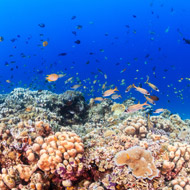
Some six million people around the world fish from coral reefs and another 400 million indirectly rely upon them for their livelihoods.
Scientists have warned that rising sea temperatures will damage and kill coral reefs unless greenhouse gas emissions are curbed.
Speaking ahead of the Edinburgh International Science Festival yesterday (3 April), Dr Fiona Murray of the University of Edinburgh said: “Warming climates are already damaging our oceans, but it is not too late to limit future changes and protect our valuable marine resources.”
Some six million people around the world fish from coral reefs and another 400 million indirectly rely upon them for their livelihoods. But greenhouse gas emissions are causing the seas to warm up and become more acidic.
Experts say that, if left unchecked, global warming is likely to affect seafood production. Excess heat causes increased coral bleaching in tropical seas, which can damage or kill coral. Shellfish stocks in Scotland may also be at risk, they add, unless steps are taken to limit global warming.
It is thought that by the year 2100 it will be necessary to treat affected UK waters to protect selfish production. Such practices have already been introduced along the coasts of Oregon and Washington, where in 2011 acidic conditions killed three-quarters of oyster larvae.
Rising levels of CO2 have already warned up the atmosphere and 90 per cent of this heat is taken up by the oceans. If greenhouse gas emissions were curbed, however, scientists expect this would limit further change and give ocean life a chance to adapt


 Companies marketing medicines for small pets exempt from authorisation must submit their annual return to the Veterinary Medicines Directorate (VMD) by 30 November 2026.



