


Study reveals how animals measure time to reproduce
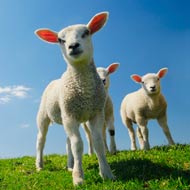
The team believe their discovery could help to control when sheep start lambing.
New research has revealed how animals measure annual time to control seasonal fertility.
Writing in the journal Proceedings of the National Academy of Sciences, scientists reveal the link between breeding season and the hormone melatonin.
“Changes during the year in sex hormones made in the pituitary gland control when mammals start reproducing, and other changes like growing new coats or developing antlers,” said joint senior author David Bates from the University of Nottingham.
“The length of the day is recognised in most vertebrate animals by the pineal gland in the brain, which produces melatonin. However, until now, it has not been known how melatonin, which is produced at night, signals to the area of the pituitary gland that controls sex hormones.”
Through a study of sheep, the researchers found melatonin controls production of two different types of a protein called vascular endothelial growth factor (VEGF). This occurs within a specific area of the pituitary gland, away from the area where sex hormones are made.
They discovered that sheep make forms of VEGF that stop blood vessels growing in winter. In summer, they make a different VEGF that makes vessels grow between the two areas of the pituitary.
“We found that this melatonin-dependent production of different forms of VEGF has two complementary effects," said Dr Domingo Tortonese, joint senior author from the University of Bristol.
“Firstly, it causes remodelling of the blood vessels that connect the brain with the pituitary gland, and secondly, it is used as a messenger signal to act on the cells of the pituitary that produce hormones that control seasonal fertility, which are located in a different part of the gland.”
The team believe their discovery could help to control when sheep start lambing, enabling farmers to respond to farmer change. They also anticipate that the findings will have an impact on human medicine.


 Companies marketing medicines for small pets exempt from authorisation must submit their annual return to the Veterinary Medicines Directorate (VMD) by 30 November 2026.



