


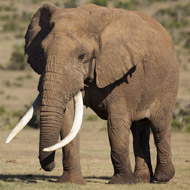
Satao was one of the world’s last remaining ‘tusker’ elephants
One of the Africa’s last remaining ‘tusker’ elephants has been killed by poachers in Kenya.
According to The Guardian, 50-year-old Satao II was found dead on Monday during a routine aerial inspection of the Tsavo National Park.
Conservationists believe the elephant was shot with a poisoned arrow. Two poachers thought to be accountable for the killing were arrested soon after.
Speaking to The Guardian, Richard Moller of the Tsavo Trust said: “Luckily, through the work we do with the Kenyan Wildlife Service, we were able to find the carcass before the poachers could recover the ivory.”
Named after another elephant killed in 2014, Satao II was one of the last giant elephants whose tusks reach as far as the ground. According to Mr Moller, some 15 tuskers remain in Kenya, out of an estimated worldwide population of 25.
In September 2016, a report by the International Union for Conservation of Nature (IUCN) revealed that the number of African elephants had fallen by about 111,000 to 415,000.
It claimed that the surge in demand for ivory - that began around 10 years ago - was the main reason for the decline, while habitat loss poses an increasingly serious, long-term threat to the species.
Mr Moller added that one of Satao’s tusks weighed 51.5kg and the other 50.5kg.
“I am pretty gutted really. This particular elephant was one that was very approachable, one of those easy old boys to find. Many of the others are much more difficult to see. He has been through lots of droughts and probably other attempts at poaching.”


 Companies marketing medicines for small pets exempt from authorisation must submit their annual return to the Veterinary Medicines Directorate (VMD) by 30 November 2026.



