


Scientists sequence mite genome in fight to save honeybees
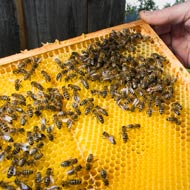
Scientists have sequenced the genome of a parasitic mite that infects honeybee colonies.
Scientists have sequenced the genome of a parasitic mite that infects honeybee colonies and causes widespread destruction.
While there are many reasons for the decline in honeybee populations, pathogens and parasites are thought to be one of the major threats.
In a collaborative study between the University of Liverpool and Xi’an Jiaotong-Liverpool University (XJTLU), researchers sequenced the genome of the bee mite Tropilaelaps mercedesae (T. mercedesae) to assess the interaction between the parasite and the host.
They found that there were specific features in the T. mercedesae genome that have been shaped by their interaction with honeybees and that current methods to control mites are unlikely to be useful.
“The genome sequence data and research findings prove useful resources for understanding mite biology and identifying potential gene-based mite control strategies,” explained Dr Alistair Darby from the University of Liverpool’s Centre for Genomics Research.
Prevalent in most Asian countries, T. mercedesae impacts bee colonies in a similar way to the globally-present Varroa destructor. When the parasite infects the colony, the mite feeds on the honeybee’s blood, causing significant damage to the wings and abdomen.
Scientists predict that with the global trade of honeybees, T. mercedesae is likely to become established worldwide.
In the study, the researchers found that T. mercedesae does not rely on sensing stimulatory chemicals to affect their behaviour. This means that control methods targeted to gustatory, olfactory and inotropic receptors are not effective.
Furthermore, the study found that T.mercedesae is enriched with detoxifying enzymes and pumps for the toxic xenobiotics. This means that the mite can acquire resistance quickly.
The paper ‘Draft genome of the honey bee ectoparasitic mite, Tropilaelaps mercedesae, is shaped by the parasitic life history’ is published in GigaScience.


 Companies marketing medicines for small pets exempt from authorisation must submit their annual return to the Veterinary Medicines Directorate (VMD) by 30 November 2026.



