


Report links intensive agriculture to decline in grasshoppers
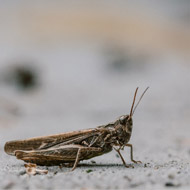
Crickets and grasshoppers are a vital food source for birds and reptiles throughout Europe.
More than 25 per cent of European grasshopper, cricket and bush-cricket species are being driven to extinction by unsustainable agriculture practices and the growing frequency of wildfires, according to a new report.
Published by the International Union for Conservation of Nature (IUCN) the European Red List of Grasshopper, Crickets and Bush-crickets report assesses, for the first time, the conservation of 1,082 species in Europe.
It found that over a quarter of all grasshoppers, crickets and bush-crickets are at risk of extinction, making them the most threatened groups of insects assessed so far in Europe. Funded by the European Commission, the project was carried out over two years by more than150 experts.
“Europe’s rapidly changing landscape is affecting many species, including insects we are so familiar with, such as crickets and grasshoppers,” says Jean-Christophe Vié, deputy director, IUCN Global Species Programme.
“To bring these species back from the brink of extinction, more needs to be done to protect and restore their habitats. This can be done through sustainable grassland management using traditional agricultural practices for example. If we do not act now, the sound of crickets in European grasslands could soon become a thing of the past.”
Crickets, grasshoppers and bush crickets - a group known as orthoptera - are a vital source of food for birds and reptiles throughout Europe. Experts believe their decline could affect entire ecosystems.
The report found that the main threat to the group is intensive agriculture, in particular the effects of overgrazing, use of fertilisers, frequent mowing and the use of pesticides. Escalating wildfires, especially in Greece and the Canary Islands, were also linked to their decline. The Gran Canaria Bush Cricket, for example, lost around one-quarter of its former range due to a large wildfire in 2007.
In light of the findings, the experts are now calling for a pan-European monitoring programme for orthoptera populations to obtain information on popular trends.
“The IUCN Red List has already helped by putting Orthoptera species with a high extinction risk on the conservation agenda,” says Axel Hochkirch, Chair of the IUCN SSC Grasshopper Specialist Group and lead author of the report.
“But our knowledge of the population trends of crickets, bush crickets and grasshoppers is still scarce, and almost 10 per cent of species have been assessed as Data Deficient due to lack of data. We urgently need more research and resources to prevent other species from going extinct unnoticed.”


 Companies marketing medicines for small pets exempt from authorisation must submit their annual return to the Veterinary Medicines Directorate (VMD) by 30 November 2026.



