


Escalating concerns about ‘designer cats’
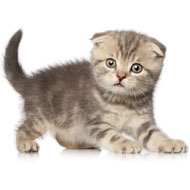
Scottish folds are bred to have ears that fold over, giving them a ‘baby-face’ look but the gene that affects cartilage in the ears also affects other joints.
International Cat Care has added its voice to concerns about the trend for ‘designer cats’ including munchkins, Manx and Scottish fold cats, which are bred to have genetic defects.
News reports over the past week highlighted growing demand for these cats, fuelled by celebrity owners and online videos, after a vet spoke out against the trend, branding it “cruel”. The Mail on Sunday said it had seen munchkin cats being sold for up to £900 online.
Munchkin cats have a defective gene that causes their legs to be short and stunted. It can also lead to joint problems and pain, abnormal curvature of the spine and flattening of the ribcage.
Manx cats suffer from a genetic deformity that prevents the tail and spine from forming properly. The malformed spine can lead to other problems including constipation, rectal prolapse, a hopping gait caused by skeletal and nerve problems and arthritis in the joints. Manx cats are actually used as a model for the human condition spina bifida.
Scottish fold cats are also used as a human model for human disease - in this case arthritis - as they can suffer from crippling arthritis from a very early age. Scottish folds are bred to have ears that fold over, giving them a ‘baby-face’ look but the gene that affects cartilage in the ears also affects other joints.
For some ‘designer’ breeds, if two cats with the deformity are bred together, a percentage of kittens will get a potentially fatal ‘double dose’ of the gene, which can result in resorption, mummification, abortions or stillbirths. Survivors with the deformity are likely to suffer long-term.
iCatCare says that, despite a lack of scientific data, the potential for fatality coupled with the obvious deformity of the cats, suggests that many - if not all - suffer pain and compromised welfare.
Gatehouse Veterinary Centre rescued two munchkin cats that proved difficult to rehome as they needed a house with no stairs and cannot go outdoors due to their arthritis and lack of mobility.
Veterinary nurse Kelly Eyre said: “They are both on long term pain relief and have joint supplements. We have also just started them on supplements to improve their fur as Bonnie is struggling to maintain her coat condition now. They can have days where they appear grumpy and unsociable, and sometimes Clyde doesn't get out of his bed until the afternoon. That's when we know he's not feeling too good.
“It must be exhausting to be in chronic pain. If they didn't live with us at the practice, who knows what their lifestyle would be like elsewhere. Here we can monitor their pain, monitor their bloods where money isn't an issue and have professionals keeping a close eye on them.”
Claire Bessant, chief executive at iCatCare, believes more awareness is needed among the general public.
“Our position on breeding cats is that first no harm should be done,” she explained. “If there is even the smallest chance that having a particular ‘look’ causes problems, then we should simply not be accepting of the breed and all of us should be encouraging cat lovers everywhere to speak out against such breeding, and strongly urging people not to buy these cats.
“Unfortunately, many people are unaware of the suffering which can accompany a certain look – most cat lovers would be appalled if they realised that their lovely cat was suffering. Cats are very good at hiding pain and can suffer in silence throughout their lives.”


 Eligible members of BEVA will be able to vote for their Council team until Monday, 17 August 2026. Members will have received an election email on 17 July.



