


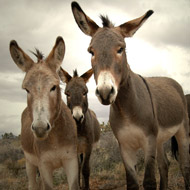
Millions of donkeys suffering to sustain demand for Chinese medicine
Millions of donkeys are at risk of being slaughtered so that their skins can be used in traditional Chinese medicine, according to an investigation by The Donkey Sanctuary.
The charity believes that as many as 10 million donkeys could suffer to sustain the demand for ejiao - a traditional Chinese medicine that relies on gelatine obtained from the hides.
It is now calling for an immediate halt to the trade until it can be proven to be humane for donkeys and sustainable to the countries that depend on them.
Comprehensive study
The Donkey Sanctuary’s ‘Under the Skin’ investigative report is the first comprehensive study of the trade. It found that the trade in ejiao has led to an explosion in the number of donkeys in Asia, Africa and South America being sourced, stolen and slaughtered for their skin.
Donkeys caught up in the trade have little hope. The charity says that the skin of an expensive, healthy animal generates as much profit as a diseased animal. This means that traders see no value in maintaining good welfare conditions.
“We’ve seen reports of donkeys being skinned alive, being bludgeoned to death, being transported for long distances with no opportunity to rest, feed or drink,” commented Alex Mayers, international programme manager at The Donkey Sanctuary.
“The welfare of any donkey both during and at the end of its life is paramount and should be the primary concern, as for any food-producing animal. Sadly the welfare of donkeys used to produce skins and meat is frequently reported to be ‘severely compromised’ during sourcing, transport and slaughter.”
Recommendations
While most countries with significant donkey populations are reporting an increase in donkey slaughters, some countries- like Burkina Faso and Niger - have banned the export of donkey hides.
The Donkey Sanctuary says that its report will now be used as a tool to champion donkeys and their welfare on a global scale. In it, the charity recommends:
• a halt to the trade in donkey skin so the impact of the trade can be assessed
• It urges countries to follow the lead of Burkina Faso and Niger and ban the slaughter and export of donkeys
• It calls on governments and the industry to help raise public awareness about the impact of the trade so that consumers of ejiao can make an informed choice
• It appeals to governments and local authorities to join efforts to support affected communities
“Donkey populations cannot continue to be decimated and communities must not be deprived of their only means of survival. Action must be taken now to curb this trade, in the interest of both animal and human welfare,” said Mike Baker, CEO of The Donkey Sanctuary.


 Companies marketing medicines for small pets exempt from authorisation must submit their annual return to the Veterinary Medicines Directorate (VMD) by 30 November 2026.



