


Team maps movements of alien bird species
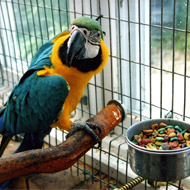
Some of the birds introduced in recent years include popular cage birds like parrots, starlings and finches.
An international team of researchers has created the first global map of alien bird species.
Published in PLOS Biology, the map shows that human activity determines how many alien bird species live in a certain area.
It also reveals that alien species are most successful in areas that are already rich with native species.
“One of the main ways humans are altering the world is by moving species to new areas where they do not normally occur,” explained supervising author, Professor Tim Blackburn from University College London.
“Our work shows why humans have been moving these ‘alien’ bird species around for the last 500 years – primarily through colonialism and the increasingly popular cage bird trade – and why some areas end up with more species than others.”
In the study, researchers gathered data from almost 1500 alien bird species between 1500 and 2000 AD. They then analysed the data for patterns in the context of historical events and variations in their natural environment.
The researchers found that more than 50 per cent of all known bird introductions occurred after 1950 which, they say, is likely to have been driven by the trade of caged birds.
Furthermore, the researchers found that more bird introductions occurred in the 17 years between 1983 - 2000 AD than they did in the 403 years from 1500 - 1903 AD.
The rate of introductions grew sharply in the mid-nineteenth century as Europeans, particularly the British, began to export ‘beneficial’ birds like ducks and geese to new territories.
The study also shows that after World War Two, another acceleration occurred. Driven by the growth in trade, some of the birds introduced in recent years include popular cage birds like parrots, starlings and finches.
The analysis suggests that more alien birds were introduced where there is more disposable income. In some areas, owning a bird is a status symbol - and sometimes they escape or get released.
Hotspots on the map tend to be where there are former British colonies and countries with high GDP. This includes the US, Japan, Taiwan, Hong Kong, New Zealand and Australia.
But the team found that areas with more native bird species also tended to be home to more alien species.
“The term ‘the rich get richer’ certainly applies here. Areas that are good for native birds are also good for alien birds. This isn’t a new observation, but it’s the first time we’ve been able to show it factoring out the key effects of historical human actions,” explained Professor Blackburn.
“However, the global bird trade continues to grow, which means we can certainly expect alien species richness to continue to grow in the foreseeable future. It’s a worry because aliens may threaten the survival of native species.”


 A nationwide roadshow offering free, personalised parasite risk assessments and flea and tick checks will be visiting popular dog events across the UK.



