


Study uses citizen science to uncover lost birdsong
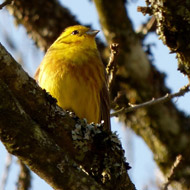
Volunteers in the UK and New Zealand were encouraged to collect and submit recordings of singing yellowhammers.
Czech scientists have used citizen science to provide new insights on the cultural evolution of birdsong.
The study, published in the journal Ecology, examined the dialects of yellowhammers in their native home, Great Britain, and in their invaded home, New Zealand.
It found that some yellowhammer dialects in Great Britain appear to have gone extinct, yet they still exist in New Zealand - a phenomenon that also occurs in human dialects.
“It was fascinating to have this unique opportunity to study yellowhammer dialects from native and introduced populations and how they have evolved over 150 years,” said lead author Pavel Pipek, of the Charles University in Prague.
“This phenomenon of lost birds’ dialect is an avian equivalent of what happens with human languages. For example, some English words, which are no longer spoken in Great Britain, are still in use in the former British colonies.”
Introduced from Britain to New Zealand between 1865 and 1879, the yellowhammer has spread widely - even reaching some islands off-shore.
In the study, volunteers in the UK and New Zealand were encouraged to collect and submit recordings of singing yellowhammers using their smartphones. Scientists then used these recordings to compare patterns of yellowhammer dialects in both countries.
While the team expected New Zealand yellowhammers to exhibit fewer dialects than those in Great Britain, they actually found quite the opposite - New Zealand has twice as many yellowhammer dialects as Great Britain.
Experts believe this could be because New Zealand yellowhammers have retained some structures which were from Great Britain. However, these dialects have been lost in the UK, possibly due to the species’ rapid decline.
“Yellowhammers are a delightful farmland bird with unmistakable bright yellow heads. At one time they were a common sight, but sadly their numbers have declined so rapidly that nowadays they are difficult to find in many parts of the UK,” commented co-author Dr Mark Eaton, RSPB principal conservation scientist.
“It’s likely the decline in yellowhammers has led to some of their original dialects being lost yet these have survived in the songs of the birds in New Zealand due to the abundant populations. This birdsong may, therefore, serve as a living archive of songs sung by yellowhammers in 19th century Britain.”


 Companies marketing medicines for small pets exempt from authorisation must submit their annual return to the Veterinary Medicines Directorate (VMD) by 30 November 2026.



