


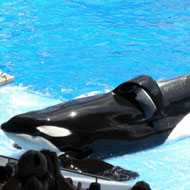
San Diego’s orca show runs last performance
SeaWorld has announced its male orca Tilikum, who featured in the 2013 documentary Blackfish, has died.
Tilikum, who was 36 years old, is reported to have died on 6 January surrounded by his trainers, care staff and veterinary surgeons.
While the cause of death has not yet been confirmed, SeaWorld said the orca had “some very serious health issues” including a “persistent and complicated bacterial lung infection”. The official cause of death will be determined by an autopsy.
SeaWorld said it was ‘deeply saddened’ by Tilikum's passing but he had ‘lived a long and enriching life’. Critics of the park, however, claim the orca endured three decades of misery.
Tilikum was collected from the wild by Sealand of the Pacific in Canada, and became part of SeaWorld’s collection 25 years ago. In 2010 he killed his trainer Dawn Brancheau after dragging her underwater in his tank, and was also linked to two other human deaths.
The orca later became the focus of the Blackfish documentary, which strongly criticised SeaWorld, claiming that confinement caused the whales to become more aggressive.
SeaWorld said in a statement: ‘Tilikum’s life will always be inextricably connected with the loss of our dear friend and colleague, Dawn Brancheau. While we all experienced profound sadness about that loss, we continued to offer Tilikum the best care possible, each and every day, from the country’s leading experts in marine mammals.”
The park’s president and CEO Joel Manby added: “Tilikum had, and will continue to have, a special place in the hearts of the SeaWorld family, as well as the millions of people all over the world that he inspired.”
Following the loss of Tilikum, 22 orcas remain at SeaWorld’s three sites in Orlando, San Diego and San Antonio.
SeaWorld San Diego’s long-running orca show, One Ocean, had its last performance on Sunday (8 January). The company announced plans to phase out San Diego’s ‘theatrical killer whale experience’ back in 2015. It will be replaced with a new show focusing more on natural behaviours.
Last year SeaWorld also revealed it would end its controversial orca breeding programme, meaning the orcas currently in its care will be the last generation.
Image by Milan Boers/Wikimedia Commons/CC BY 2.0


 Companies marketing medicines for small pets exempt from authorisation must submit their annual return to the Veterinary Medicines Directorate (VMD) by 30 November 2026.



