


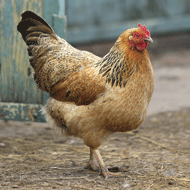
Even small flocks must be kept apart from wild birds, chief vet says
Avian influenza H5N8 has been confirmed in a small backyard flock near Settle in North Yorkshire, Defra has confirmed.
A 3km protection zone and 10km surveillance zone have been put in place around the premises and all remaining live birds are being humanely culled. The infected flock contained 17 chickens and ducks, several of which died from the disease.
Chief veterinary officer Nigel Gibbens said: “We have taken swift action to limit the risk of the disease spreading. Restrictions are now in place around the affected premises and a full investigation is underway to determine the source of the infection.
“This finding in a backyard flock shows how essential it is for all poultry owners, even those who just keep a few birds as pets, to do everything they can to keep them separate from wild birds and minimise the risk of them catching avian flu via the environment.
“This means keeping birds in a suitable building where possible, and taking precautions such as putting up netting, keeping food and water inside and disinfecting footwear and equipment after contact with birds.”
The same strain of avian influenza was detected in a backyard flock in Carmarthenshire, Wales, last week and on a turkey farm in Lincolnshire in December. It has also been confirmed in wild birds in England, Scotland and Wales.
A prevention zone requiring birds to be housed indoors or separated from wild birds has been extended until 28 February. There is also a temporary ban on bird gatherings.
Practical advice has been issued for people with backyard poultry to help them comply with the requirements: https://www.gov.uk/guidance/avian-influenza-bird-flu#backyard-flocks


 Companies marketing medicines for small pets exempt from authorisation must submit their annual return to the Veterinary Medicines Directorate (VMD) by 30 November 2026.



