


Thomas Cook launches new animal welfare policy
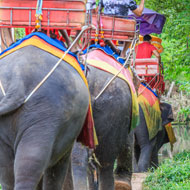
Thomas Cook has pledged to phase-out practices that are known to severely compromise the welfare and survival of animals.
Travel company Thomas Cook has launched a ground-breaking new policy that seeks to improve the welfare of animals in captivity.
Announced on Tuesday (13 December), the policy has been developed in partnership with The Born Free Foundation. It will require all animals attractions and outings sold by Thomas Cook to evidence full compliance with the ABTA Global Guidance.
‘Put simply, if an attraction is found not to be fully compliant with the ABTA Global Welfare Guidance for Animals in Tourism, Thomas Cook won’t sell it,’ explained Peter Fankhauser, Thomas Cook’s group chief executive.
‘We know that for many people, animals in captivity of any form is unacceptable. However, it is a sad truth that many captive animals cannot be safely returned to the wild.
‘Tourism has a big role to play in raising standards for those animals during the transition to ending the practice of capturing animals for entertainment, and ending practices that are known to harm animals.’
As well as refusing to sell attractions that do not comply with minimum welfare requirements, Thomas Cook has also pledged to phase-out practices that are known to severely compromise the welfare and survival of animals.
Furthermore, the company has promised to ensure that existing facilities keeping captive wild animals meet the highest animal welfare standards.
Welcoming the announcement, Will Travers OBE, CEO and President of Born Free Foundation said:
“Thomas Cook’s decision to lead the travel industry away from the exploitation of wild animals in captivity for entertainment purposes, towards a future where their welfare needs are respected and tourism becomes a driver for conservation and environmental protection, is a vision I and millions of others wholeheartedly support.
“Thomas Cook and Born Free are charting new territory where an extraordinary future beckons, one based on respect and compassion. Together we will defend the principle that wild animals should be free, and we commit ourselves to their protection, and the conservation of the natural world.”


 Companies marketing medicines for small pets exempt from authorisation must submit their annual return to the Veterinary Medicines Directorate (VMD) by 30 November 2026.



