


Pigs can be optimists or pessimists, study suggests
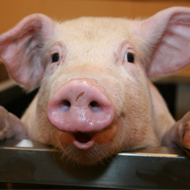
Pigs living in highly enriched environments were found to be more optimistic.
Pigs can be optimists of pessimists depending on their mood and personality, new research suggests.
A study published in Biology Letters found that, just like humans, pigs living in poorly enriched environments were more pessimistic, and those in a more enriched environment, more optimistic.
Commenting on the findings, the researchers write: “These results suggest that judgement in non-human animals is similar to humans, incorporating aspects of stable personality traits and more transient mood states.”
In the study, scientists at the University of Lincoln offered 36 pigs bowls filled with chocolate or coffee beans. Dr Lisa Collins, who led the study, considered the pigs optimists if they investigated a third empty bowl, that was placed between the filled bowls.
The 36 pigs were divided equally between a highly enriched environment and a lesser enriched environment. Both environments had solid floors, a slatted area and wooden blocks on chains. More enriched environments had deep straw and a larger space allowance.
The team found that the reactive pigs were more influenced by their housing environment. Those living in the worse environment were more pessimistic and those in the better environment were more optimistic.
“This finding demonstrates that humans are not unique in combining longer-term personality biases with shorter-term mood biases in judging stimuli,” the team concludes.
“Optimistic and pessimistic repossess can both be adaptive depending on the environment, allowing appropriate response to reward or threat signals, respectively.”


 Companies marketing medicines for small pets exempt from authorisation must submit their annual return to the Veterinary Medicines Directorate (VMD) by 30 November 2026.



