


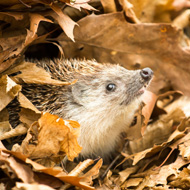
Charities issue tips for a hedgehog-friendly fire
As Guy Fawkes’ night approaches, wildlife charities are reminding people to check for hedgehogs when building bonfires.
Chilly mornings and dark evenings herald the arrival of hibernation season for hedgehogs. Piles of dry leaves and unlit bonfires make the ideal spot for sleepy hogs seeking a home for the winter months.
“Hedgehog numbers are declining rapidly across the UK, so it’s never been more important to protect the wonderful wildlife on our doorsteps,” said Tarnya Knight from the Born Free Foundation.
“Hedgehogs can die or suffer terrible injuries through contact with bonfires, so we’re asking people to be especially vigilant for the next few weeks and take care when building them.”
The British Hedgehog Preservation Society (BHPS) are calling on people to build bonfires on the day they are to be lit to save hedgehogs and other wildlife from appalling suffering.
“If material is stored on open ground in advance of having a bonfire, it’s crucial to dismantle it and move it to another spot just before lighting,” explains Fay Vass, chief executive of the BHPS.
“Ensure it’s moved to clear ground – never on top of a pile of leaves as there could be a hedgehog underneath, and not too close to pampas grass which can ignite very easily and is another favourite spot for hedgehogs to hide under.”
The Born Free Foundation has also issued a series of tips for a hedgehog friendly fire which include:
• If you are unable build the fire on the day of lighting, use a broom handle to check the bonfire by gently lifting section by section and using a torch to look and listen for hedgehog
• If a bonfire has to be built in advance, prevent hedgehogs from getting in by putting chicken wire one metre high all the way around the bottom. This should be held in place with stakes and the wire should slope outwards at an angle to make it difficult to climb, as hedgehogs are good climbers!
• If you do find a hedgehog in your unlit bonfire, place it in a box with some leaves or shredded paper, with some water and meaty cat or dog food, and place it in a shed where it can be left in the quiet until the fireworks have finished and the bonfire dampened down.
Born Free add that autumn and winter also pose a threat to young or underweight hedgehogs, that are too small to survive hibernation.
“Hedgehogs born late in the year are still very small at this time of year, and most will not be carrying enough weight to survive the winter months,” said Tanya.
“We recently took in a family of four tiny hoglets and their mother, whose nest had been disturbed. It was a blessing that they were found as they wouldn’t have made it otherwise. They will all be overwintered indoors and released next spring.”
She adds: “We’d advise anyone who finds a young or underweight hedgehog at this time of year to contact their local wildlife rescue centre or vet.”


 Companies marketing medicines for small pets exempt from authorisation must submit their annual return to the Veterinary Medicines Directorate (VMD) by 30 November 2026.



