


Virus may be capable of infecting dogs and humans
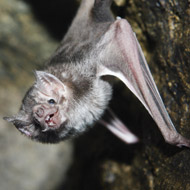
Bat influenza virus has the potential to infect both dog and human cells, according to new research.
Writing in the journal Proceedings of the National Academy of Science, experts report a breakthrough in isolating bat influenza virus - the first time this has been achieved in a laboratory.
However, the study took an unexpected turn when the team found that bat influenza virus infected not only bat cells but also dog and human cells.
In the study, the team analysed over 30 cells lines from different species for their ability to recognise and internalise bat influenza viruses.
They did this by first using another virus - vesicular stomatitis virus - which can infect many different types of cell. They then proceeded to engineer this virus, so that it could incorporate on its own surface, a bat influenza protein.
Following this, the bat cell line most susceptible to the engineered stomatitis virus was used to reconstruct the original bat influenza virus.
The researchers found that most cells - including human cells and a particular cell line of canine origin - were highly susceptible to infection. This suggests that bat influenza has the potential to transmit to dogs and humans, they conclude.
Speaking to Science Daily, Professor Martin Schwemmle from the University of Freiburg, said that while there is no evidence yet for such transmissions, the new findings are a ‘wake-up call’ for more research.
"It is too early to jump to definite conclusions on the ability of this virus to cross the species barrier and infect humans but our studies make it possible now to conduct further experiments and analyse the risk that these viruses pose for other species," he said.


 Companies marketing medicines for small pets exempt from authorisation must submit their annual return to the Veterinary Medicines Directorate (VMD) by 30 November 2026.



