


New Marek’s disease vaccine shows promising results
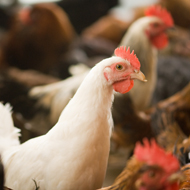
Marek's diseases costs the poultry industry round £1 billion a year.
A potential new vaccine against Marek’s disease has shown promising results, according to scientists at The Pirbright Institute.
Marek’s disease virus (MDV) is a highly contagious airborne pathogen that infects poultry. Costing the industry some £1 billion a year, MD is currently controlled through vaccination.
‘Classical’ MD vaccines are live non-virulent viruses and are highly protective against mortality and disease. But there are drawbacks due to the biological characteristics of the virus - like the need to be kept cold.
While classic vaccines are effective in protecting against disease, they do not prevent infection and replication of virulent field strains of MDV. Even more concerning, recent research supports the idea that vaccination against MD could be driving the evolution of more virulent strains.
As a result of industry pressure, scientists are looking to vector-based vaccines that do not need to be kept cold, are easier and cheaper to produce, and are more easily distinguished from the pathogenic virus.
In a study, published in the Journal of Veterinary Medicine and Research, scientists from The Pirbright Institute’s AvianOncogenic Virus group examined the efficacy of using non-replicating adenovirus expressing MDV envelope glycoprotein (AD5-gB) as a potential Marek’s disease vaccine in chickens.
They compared the experimental adenovirus with a clone of the classic MD vaccine (pCV1988) measuring levels of protection against the disease and levels of shedding and transmission of virulent virus.
They found that a double dose of the adenovirus vaccine was comparable to the classic vaccine in its ability to significantly reduce MDV. It also provided 100 per cent protection against mortality and disease.
But while the adenovirus vaccine delayed the onset of shedding of virulent MDV, it did not prevent shedding. It was also less effective than the classic vaccine at reducing shedding and transmission of virulent virus.
Dr Susan Baigent, who led the research, said: “Although it was slightly disappointing that the Ad5-gB vaccine did not significantly reduce transmission or shedding, it is very encouraging that this vectored vaccine was as effective in protecting birds against disease as the current live vaccine, and resulted in lower levels of virulent virus in infected birds’ blood when given as a double dose.
“What we don’t know is whether a single dose post-hatch would be as effective as a double-dose or whether using a higher dose of Ad5-gB vaccine would be more effective in reducing shedding and transmission. Clearly, further research is needed on optimising the dose and time of vaccination in order to begin trials of Ad5-gB as a potential vectored vaccine candidate for Marek’s disease.”


 Companies marketing medicines for small pets exempt from authorisation must submit their annual return to the Veterinary Medicines Directorate (VMD) by 30 November 2026.



