


Schmallenberg virus 'may reappear', experts warn
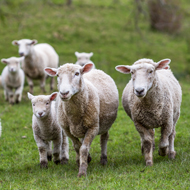
Schmallenberg may reappear after a period of low circulation, as has been seen with bluetongue virus in France.
New research suggests that Schmallenberg virus (SBV) is unlikely to be circulating in the south of England, but experts warn the virus could reappear in years to come as herd immunity decreases.
SBV is a midge-borne viral disease that causes only mild clinical signs in adult ruminants, but leads to abortions, stillbirths and congenital defects if pregnant females become infected. After it was discovered in dairy cattle herds in Germany during 2011, it spread across Europe.
The UK saw high circulation of SBV in 2012-2013, followed by a decline in 2014. Researchers from the University of Liverpool wanted to find out if this was a true decrease in circulation, or a lack of reporting. Their findings have been published in the Veterinary Record.
Led by Jessica Stokes, the team tested 1,444 samples from sheep aged six to 12 months, from 131 farms last year. Only five samples tested positive, but were later confirmed as negative by a 'gold standard' test at an external lab. All sheep tested were born after October 2014 and were over six months old, to exclude animals with immunity following infection in 2012-2014.
Despite these findings, researchers say Schmallenberg may reappear after a period of low circulation, as has been seen with bluetongue virus in France. The country was declared disease free in 2012, only for the virus to re-emerge last year, most likely from wildlife.
Furthermore, there are concerns that governments, vets and farmers may become less aware of Schmallenberg due to its lack of circulation, and may think - or hope - that it has disappeared. In an editorial accompanying the research, Nick de Regge from the University of Ghent in Belgium, said the data for similar viruses predicts otherwise.
No data are currently available on the level of immunity against Schmallenberg in wild populations, but the susceptible population is likely to increase as herd immunity falls.
"Five years after its initial emergence, this could shape the ideal conditions for a renewed large scale re-emergence of Schmallenberg virus that would probably be be followed by a new abortion storm," he warned.
"It seems advisable to closely monitor the situation via different surveillance techniques to allow timely warnings to veterinarians and farmers and to remind them to remain alert."
Researchers called for more emphasis on wildlife surveillance and trapping and testing of midges across specific sites that are at high risk of wind transfer from Europe.
"Regardless of the current status of Schmallenberg virus in Europe, this study has highlighted a large, naive population susceptible to future outbreaks, within the south of England," they explained. "Effective surveillance systems are therefore needed to warn vets and farmers of future disease risks."


 Companies marketing medicines for small pets exempt from authorisation must submit their annual return to the Veterinary Medicines Directorate (VMD) by 30 November 2026.



