


New bee spotted in Britain
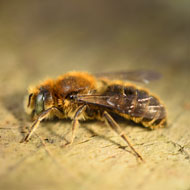
Hopilitis adunca, or viper's bugloss mason bee as it has been named, is more commonly found in continental Europe.
A new bee species, Hoplitis adunca, has been spotted breeding in Britain for the first time. It was found by Natural History Museum scientist David Notton during a survey of the Greenwich Peninsula Ecology Park London.
The bee is using nest boxes at the site, which offers a good habitat for the species with its warm micro-climate, mud and deadwood for making nests and plentiful supply of its preferred flower, the viper's bugloss.
Hopilitis adunca, or viper's bugloss mason bee as it has been named, is more commonly found in continental Europe. It does not pose a threat to British pollinators.
Notton said the discovery shows how important urban green spaces are in giving pollinators a home. Bee nesting boxes in parks and gardens can also help to support them. However, he does not believe the viper's bugloss mason bee will become widespread in Britain.
"It's at the limit of its temperature range here, and is restricted by its reliance on pollen from a specific plant called viper's bugloss," he explains.
The species lives alone rather than in a colony and makes its nests in hollow stems or holes in wood, capped with mud. Such bees can sometimes be moved around if they nest in cavities in freight or vehicles.
Simon Pile, estates manager south at the Land Trust, which owns the site, commented: "It’s fantastic that everyone’s hard work and our long-term investment in Greenwich Peninsula Ecology Park are having such a wonderful impact on the environment and this bee in particular. We’re delighted that it now calls Greenwich home and are looking forward to future research and discoveries at this little green oasis in London."
Over 270 bee species reside in Britain and around 80 of these can be found at the ecology park. Ten per cent of these are at some degree of risk. Their habitats on-site are managed by project officer Tony Day, with The Conservation Volunteers and the Land Trust working together to provide an ideal environment and monitor populations.
Notton says it's a mixed bag for bees in Britain - some are coping while others are struggling. Habitat change, climate change and pesticides all have an impact.
Image © James McNish


 Companies marketing medicines for small pets exempt from authorisation must submit their annual return to the Veterinary Medicines Directorate (VMD) by 30 November 2026.



