


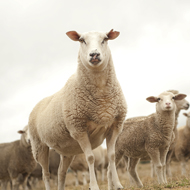
High risk in the North and West
Sheep farmers must be on their guard against liver fluke this autumn, according to a leading scientist at Moredun.
Philip Skuce, who is part of the Sustainable Control of Parasites (SCOPS) group, says the weather has provided ideal conditions for mud snails that act as a host during the fluke’s life cycle.
Dr Skuce warns that this is not going to be the same for everyone: “Some parts of the UK have been very wet, particularly in the west, whereas others such as the south-east have been relatively dry. As a result, NADIS has specifically forecast that liver fluke risk will be high in Scotland, North West England and North Wales.”
Sheep are at risk of infection of picking up liver fluke from now until the winter. Clinical signs of infection include:
• Abdominal pain, with animals reluctant or unable to move
• Anaemia, seen as pale eyes, gums etc.
• Submandibular oedema or ‘bottlejaw’
• General ill-thrift.
SCOPS advise farmers to investigate fallen stock and request abattoir feedback on evidence of fluke or any fluke damage.
They add that routine diagnostic testing can also help build up a picture of what’s happening on the farm. For example, fencing off particularly wet areas on farms, even temporarily, will help reduce exposure.
“Unfortunately, we know many sheep farmers will simply treat their animals for fluke without any evidence of infection or of how effective any treatment has been,” Dr Skuce continues.
“There are a number of flukicidal drugs available, each with its own spectrum of activity against different stages, and I urge farmers to use the SCOPS website to get to grips with this.
“Reports of resistance to triclabendazole (TCBZ), the drug of choice for treating acute fluke in sheep, have been increasing and guidance on this and suitable quarantine strategies for fluke can also be found on the SCOPS website,” he adds.


 Companies marketing medicines for small pets exempt from authorisation must submit their annual return to the Veterinary Medicines Directorate (VMD) by 30 November 2026.



