


"We're here for our patients' welfare"
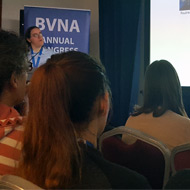
Abgail Edis spoke to a packed lecture hall at BVNA Congress in Telford.
Kicking off the exotics and wildlife stream at BVNA Congress this morning, Abigail Edis looked at the way veterinary nurses can interpret rabbit behaviour and apply it to a pain scale based on current research.
Abigail, who heads up up the exotics team at the Beaumont Sainsbury Animal Hospital at the RVC, began by explaining by explaining why rabbits can be tricky to assess and what causes pain.
She expressed that while some students and newly qualified veterinary nurses might not feel confident, they must not be afraid to tell vets if they think their patient is suffering.
"The number on thing to remember is that we're here for our patients' welfare and we need to be able to go to our vets and say: "I'm not happy with this patient," she said.
Ms Edis looked then looked at pain scoring scales. At present there are no validated pain scoring systems for rabbits and those that do exist have been adapted from those created for cats and dogs.
Abigail suggests VNs create their own pain score scale for their practice by applying what they know as normal rabbit behaviour.
Rabbits are usually explorative, curious and likely to see what you are doing, she said. They may also bob up and down and stand on their back feet. The behaviour of chin rubbing (or chinning) is also perfectly normal for rabbits.
Ms Edis concluded the lecture by urging VNs to always treat the patient holistically. Always obtain the patient's full history and get to know their habits, said Abigail.
She also urged delegates to use a multi-modal approach to analgesia if they can, and to continue ongoing pain relief at home. Consider using oral liquids which are easier for owners to administer.


 A nationwide roadshow offering free, personalised parasite risk assessments and flea and tick checks will be visiting popular dog events across the UK.



